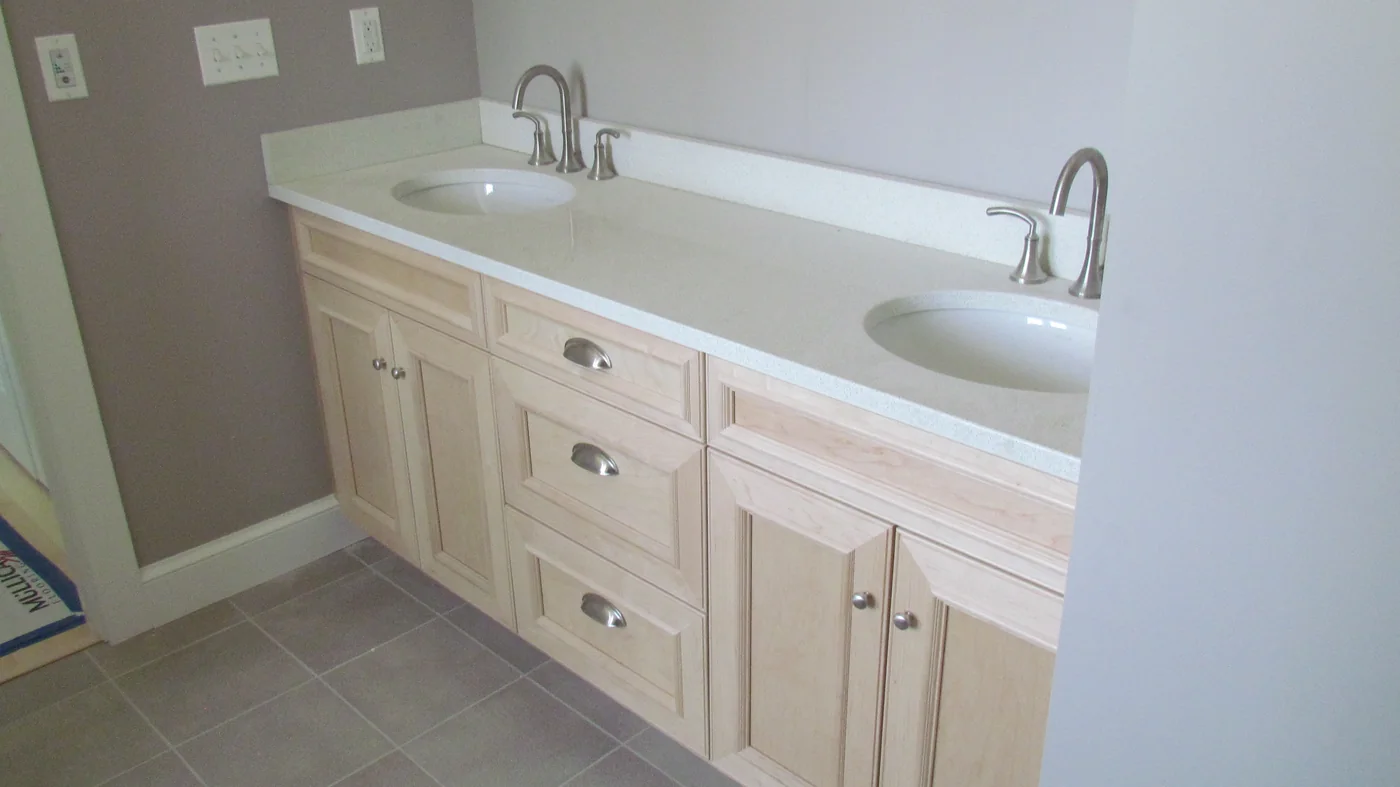
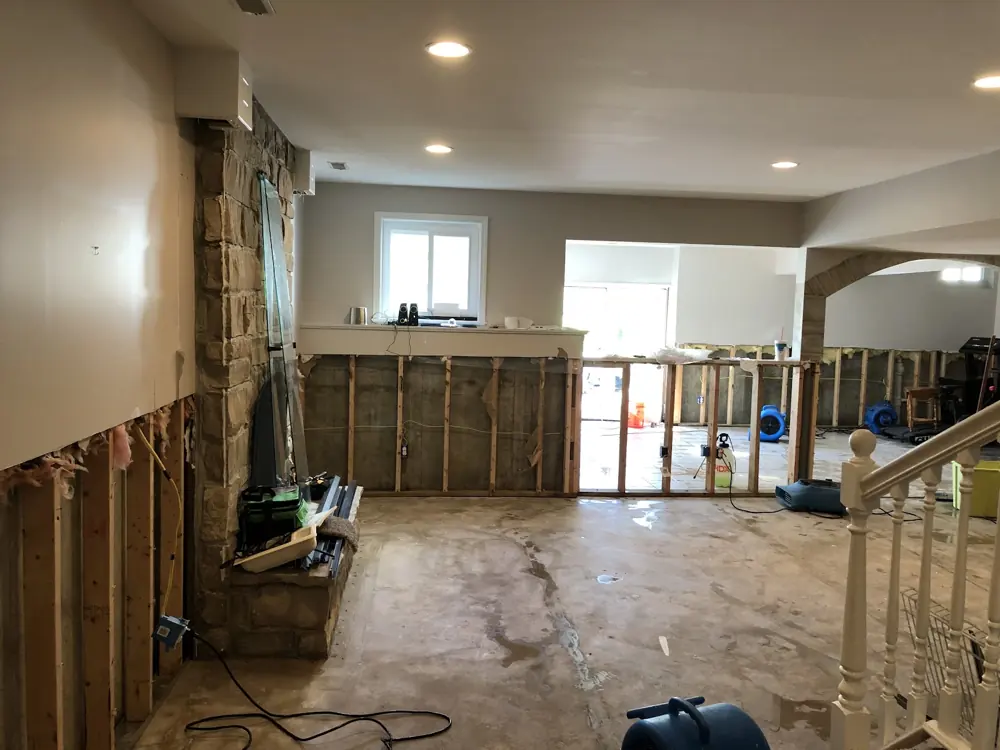
An overflowing sink or a cracked supply line floods the vanity cabinet fast and drips into whatever room sits below. Crews pull the water out within hours and dry the hidden damage before mold gets a foothold.

Standing water is pulled from the sink, vanity interior, floor, and any ceiling below with truck-mounted equipment, usually within the first couple of hours of the call.
Dehumidifiers and air movers dry out the vanity interior, the wall cavity behind the sink, and any affected ceiling below over the following five to seven days.
Surfaces are inspected for gray water exposure, particularly when a drain clog was involved, and affected areas are treated with an antimicrobial solution.
Damaged vanities, countertops, and flooring are restored or replaced, with plumbing repair coordinated separately to fix the clog or the failed supply line.

While help is on the way, these first steps, done only where it is safe, limit the damage and protect the insurance claim.
Shut the supply off at the source, or close the home's main valve if the source is not obvious. Stopping the flow limits the damage more than anything else.
Switch off electricity to the affected area, but only if the breaker can be reached without standing in or touching the water.
Get a crew dispatched right away. The sooner extraction and drying begin, the more flooring, drywall, and belongings can be saved.
Take photos and a short video of the water and the affected rooms before anything is moved, so the insurance claim starts strong.
Bathroom sink overflow cleanup typically runs $1,200 to $4,000, depending on how long the water sat, how many rooms it reached, and whether the vanity or flooring has to be replaced. Clean water from an overflow costs less to remediate than gray water tied to a drain backup. Sudden, accidental overflow is usually covered by homeowners insurance, which often brings the out-of-pocket cost down to the deductible.
Crews reach St. Louis city, St. Louis County, and the Metro East fast, from Soulard and Benton Park to Clayton, University City, Kirkwood, and Florissant. See the full list on the areas served across St. Louis page.
See all areas servedEvery loss is photographed, measured, and logged from the first visit, so the paperwork holds up with your insurance carrier.
Technicians follow recognized IICRC drying standards and prove the work with daily moisture readings, not guesswork.
Emergency dispatch any hour of the day or night, with a real crew on the way, not a callback in the morning.
A real crew dispatched any hour, not a callback in the morning.
Trained technicians following recognized IICRC drying standards.
Truck-mounted, portable, and submersible for any size loss.
The loss is documented and billed to the carrier directly.
A particle board or MDF vanity cabinet can absorb enough water to start swelling within four to six hours, and mold can begin growing inside the enclosed cabinet or the wall behind it within 24 to 48 hours in St. Louis's humid conditions.
If the water is extracted and the cabinet is dried within about 24 hours, the wood base can sometimes be saved with antimicrobial treatment. Past 48 hours of standing moisture, replacement is usually the more reliable option to keep mold from coming back.
The basement ceiling, insulation, and joists below need to be inspected and dried the same as the bathroom itself, since mold spores can start in that cavity just as easily as in the vanity.
Braided supply lines typically hold up five to ten years before corrosion weakens them, so an annual check and replacement every seven to eight years as routine maintenance heads off most sudden failures. Solid metal lines tend to outlast rubber ones.
A drywall ceiling that gets extracted and dried quickly can often be saved in place. One that has sagged or shows heavy staining usually needs to come down, and that call gets made during the initial assessment.
St. Louis crews are on call 24 hours a day, local and fast, and can be on the way within the hour.
Call (314) 762-6284