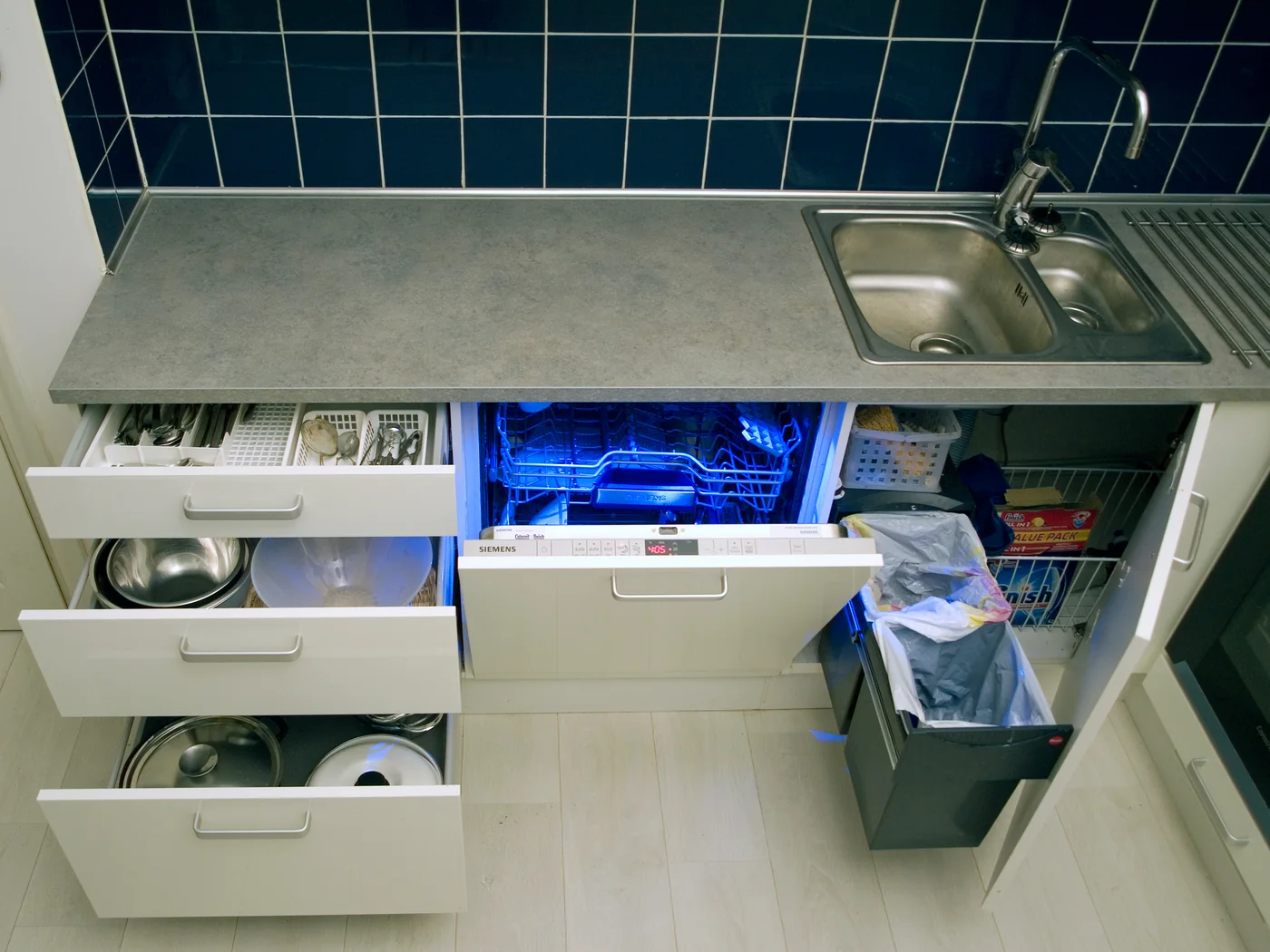
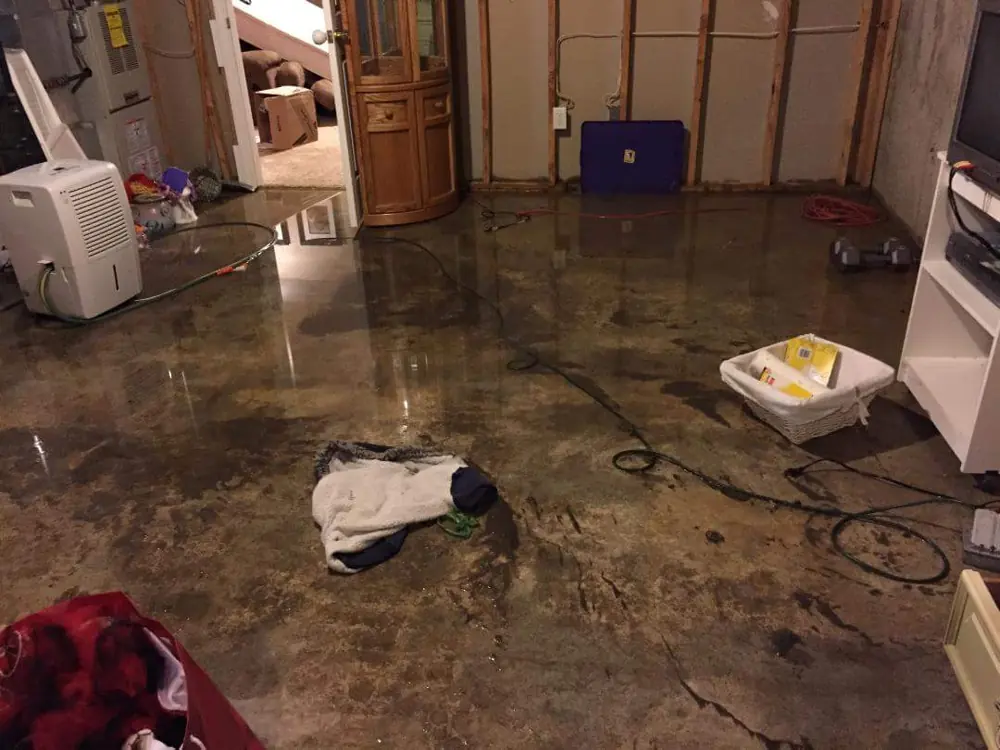
A dishwasher leak can run under the unit for weeks before it ever shows on the floor, warping cabinets and subfloor the whole time. Crews extract the hidden water and dry the cabinetry before mold takes hold.

The leak source, whether a door seal, supply line, pump, or drain, gets located and shut off to stop any more water from getting in.
Commercial extraction equipment pulls standing water from under the unit and inside the cabinetry, with pumps and wet vacuums reaching the subfloor beneath.
Thermal cameras and moisture meters trace hidden water through the cabinet frame, subfloor, and lower wall cavities to map the full extent of the damage.
Dehumidifiers and air movers run for five to ten days to dry every affected material, with moisture levels checked daily until readings return to normal.

While help is on the way, these first steps, done only where it is safe, limit the damage and protect the insurance claim.
Shut the supply off at the source, or close the home's main valve if the source is not obvious. Stopping the flow limits the damage more than anything else.
Switch off electricity to the affected area, but only if the breaker can be reached without standing in or touching the water.
Get a crew dispatched right away. The sooner extraction and drying begin, the more flooring, drywall, and belongings can be saved.
Take photos and a short video of the water and the affected rooms before anything is moved, so the insurance claim starts strong.
Dishwasher leak cleanup in St. Louis generally runs $2,000 to $5,500, depending on how long the water was running and whether the cabinetry needs to be replaced. A small leak caught early may only need drying and dehumidification, while a slow leak that soaked into the cabinet base for weeks usually means cabinet replacement and subfloor repair on top of the drying work. Most homeowners insurance covers a sudden dishwasher failure, though a gradual leak that went unnoticed for a long stretch can run into a maintenance exclusion, so it is worth checking the policy language.
Crews reach St. Louis city, St. Louis County, and the Metro East fast, from Soulard and Benton Park to Clayton, University City, Kirkwood, and Florissant. See the full list on the areas served across St. Louis page.
See all areas servedEvery loss is photographed, measured, and logged from the first visit, so the paperwork holds up with your insurance carrier.
Technicians follow recognized IICRC drying standards and prove the work with daily moisture readings, not guesswork.
Emergency dispatch any hour of the day or night, with a real crew on the way, not a callback in the morning.
A real crew dispatched any hour, not a callback in the morning.
Trained technicians following recognized IICRC drying standards.
Truck-mounted, portable, and submersible for any size loss.
The loss is documented and billed to the carrier directly.
A soft or spongy cabinet base, a musty smell when the cabinet doors open, discoloration on the cabinet bottom or the surrounding flooring, or water pooling under the lower drawers are all signs a slow leak has been running.
No. Continuing to run a leaking dishwasher just adds more water to an already damaged area. The safest move is to stop using it and have the leak source identified so a plumber or appliance tech can determine whether it needs repair or replacement.
Typical drying runs five to ten days with dehumidifiers and air movers running continuously, and cabinetry that soaked for weeks before discovery can take longer. Daily moisture checks confirm when the area has actually dried rather than just look dry.
Cabinetry that absorbed water for more than a few days often needs replacement, while surfaces caught early can sometimes be cleaned and dried in place. That call gets made after the moisture mapping shows how deep the water actually traveled.
Yes. Damp wood cabinets and subfloor are exactly the environment mold needs, which is why fast dehumidification matters so much. Extracting the water immediately and drying the full affected area within days rather than weeks is what keeps mold from ever getting started.
St. Louis crews are on call 24 hours a day, local and fast, and can be on the way within the hour.
Call (314) 762-6284