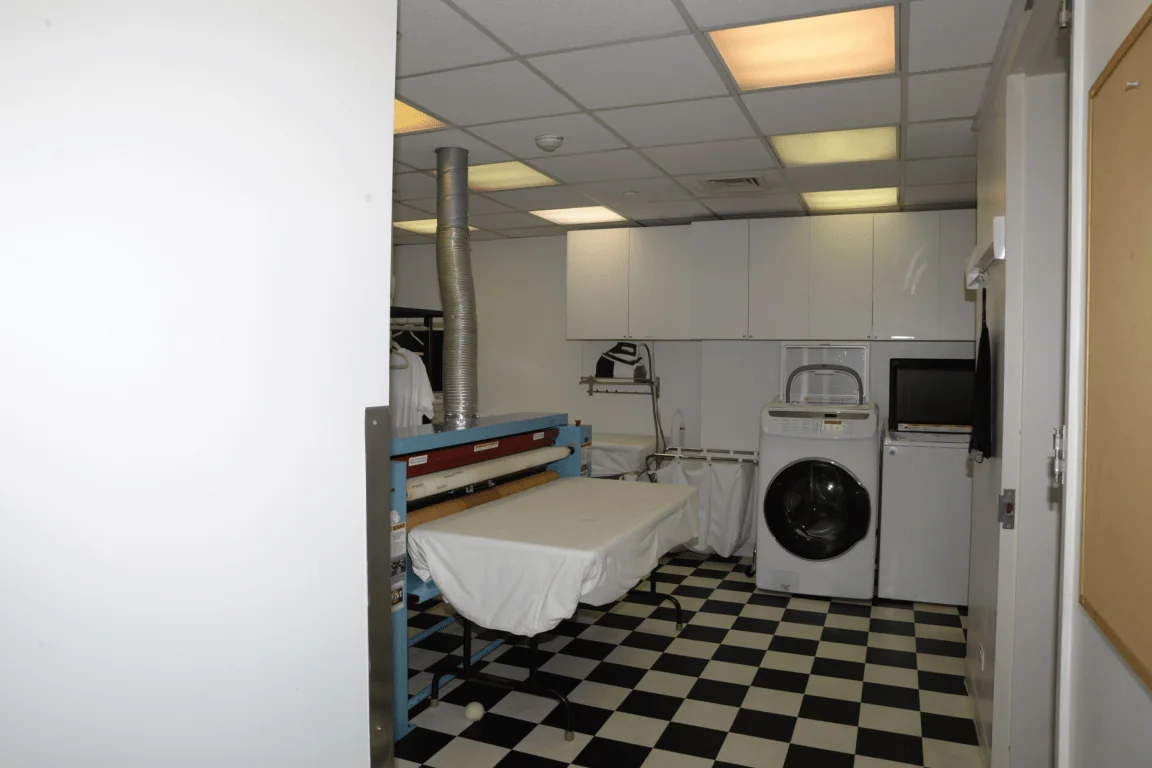
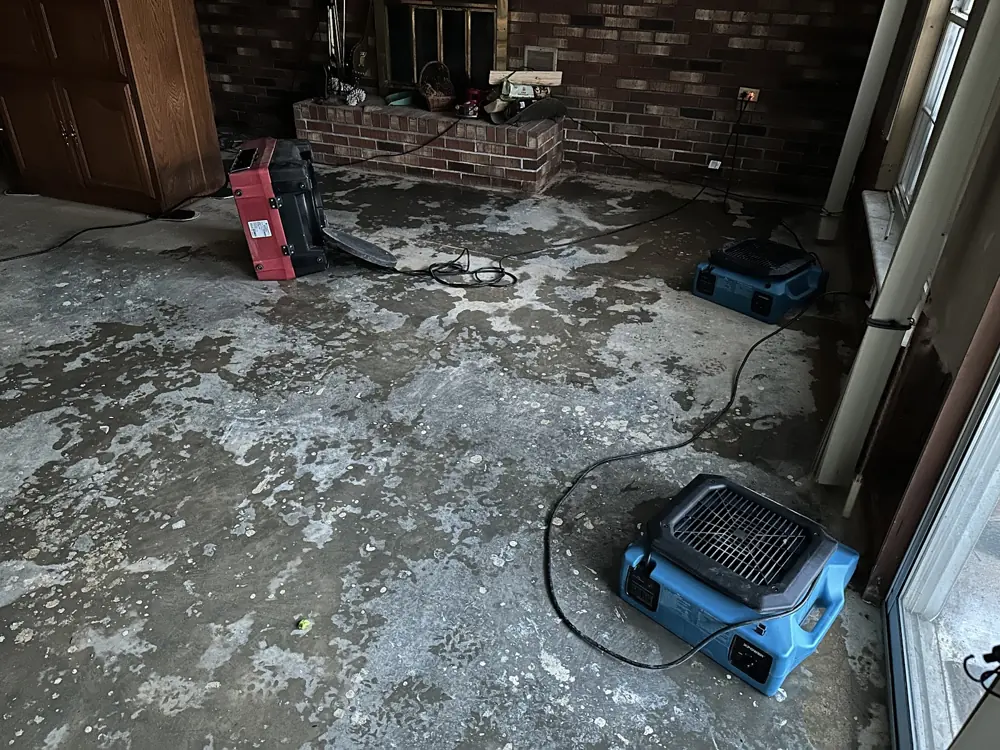
A burst hose or a drain overflow can flood a laundry room and spread water to adjacent spaces fast. Crews extract the water, dry the affected materials, and get the room back to normal quickly.

Commercial-grade pumps and wet vacs remove standing water, usually within the first hour on site.
Affected areas are mapped, moisture levels in walls and subfloors are tested, and the damage is documented for the insurance claim.
Dehumidifiers and air movers run continuously for three to seven days to dry hidden moisture in walls, subfloors, and cabinetry.
Once dry, affected surfaces are cleaned, damaged materials are disposed of, and carpet or drywall replacement is coordinated as needed.

While help is on the way, these first steps, done only where it is safe, limit the damage and protect the insurance claim.
Shut the supply off at the source, or close the home's main valve if the source is not obvious. Stopping the flow limits the damage more than anything else.
Switch off electricity to the affected area, but only if the breaker can be reached without standing in or touching the water.
Get a crew dispatched right away. The sooner extraction and drying begin, the more flooring, drywall, and belongings can be saved.
Take photos and a short video of the water and the affected rooms before anything is moved, so the insurance claim starts strong.
Washing machine overflow cleanup in St. Louis typically runs $1,500 to $4,000, depending on how far the water spread and how long it sat before discovery. A case limited to the laundry room runs on the lower end; a larger loss involving subfloor replacement costs more. Homeowners insurance commonly covers an accidental overflow from mechanical failure, and the documentation prepared during the job supports the claims process.
Crews reach St. Louis city, St. Louis County, and the Metro East fast, from Soulard and Benton Park to Clayton, University City, Kirkwood, and Florissant. See the full list on the areas served across St. Louis page.
See all areas servedEvery loss is photographed, measured, and logged from the first visit, so the paperwork holds up with your insurance carrier.
Technicians follow recognized IICRC drying standards and prove the work with daily moisture readings, not guesswork.
Emergency dispatch any hour of the day or night, with a real crew on the way, not a callback in the morning.
A real crew dispatched any hour, not a callback in the morning.
Trained technicians following recognized IICRC drying standards.
Truck-mounted, portable, and submersible for any size loss.
The loss is documented and billed to the carrier directly.
Most water extraction happens within the first two to four hours. Full drying with dehumidifiers typically takes three to seven days depending on how much water reached the walls and subfloor, with reconstruction following once drying is complete.
It's best left in place so the crew can assess the damage and confirm the source of the leak. Moving it safely is part of the extraction process once crews are on site.
Most homeowners policies cover a sudden overflow from equipment malfunction, though a gradual leak from wear and tear may not qualify. The damage is documented thoroughly to help the claim move through the adjuster.
Yes, mold can begin within 24 to 48 hours of water damage. Fast dehumidification removes moisture before it spreads into walls and hidden spaces, which is why quick response matters.
Structural damage climbs when overflow water reaches a lower level. Crews extract water from every affected area, dry the entire connected space, and check walls, joists, and stored items for damage.
St. Louis crews are on call 24 hours a day, local and fast, and can be on the way within the hour.
Call (314) 762-6284