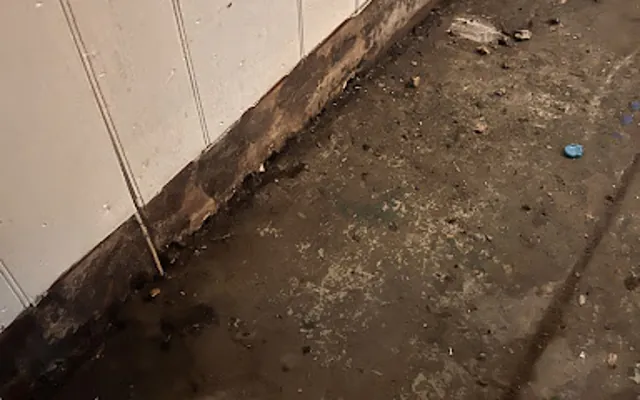
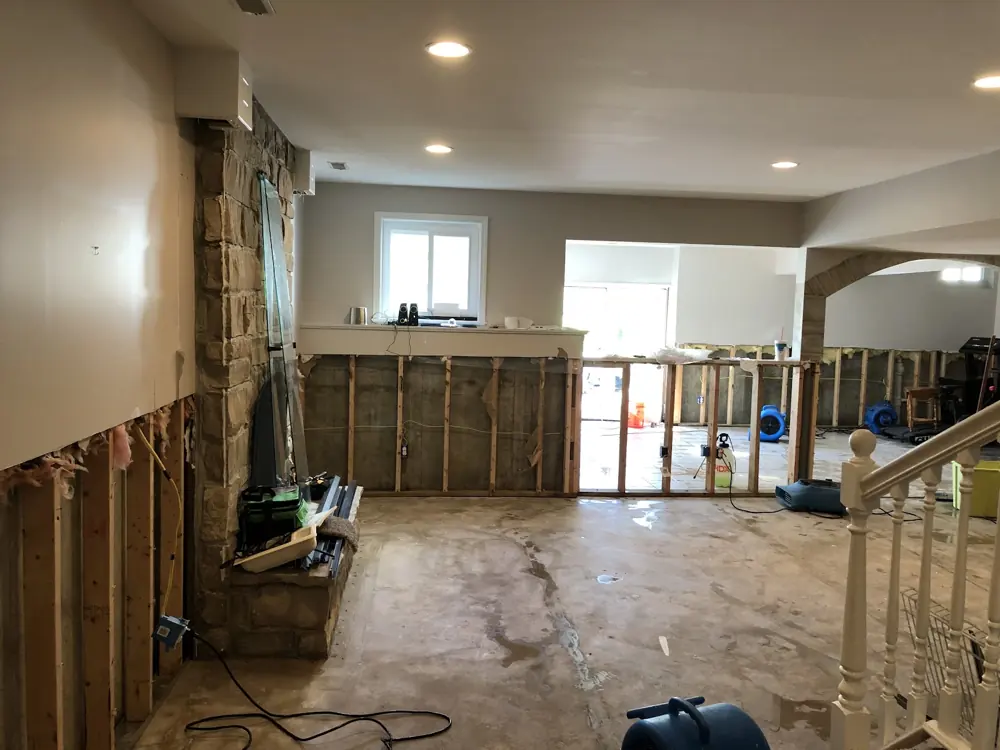
A sewage backup is not a job for a mop and a wet vac. Local crews handle category 3 contamination around the clock, with extraction and decontamination gear that gets the hazard out fast.

Crews arrive with extraction and safety equipment within hours of the call and contain the affected area before anyone re-enters it.
Contaminated water is pumped out and EPA-registered disinfectants are applied to every surface the black water reached.
Flooring, wall material, and anything porous that touched sewage is cleaned and disinfected or removed and bagged as regulated waste.
Industrial dehumidifiers and air movers dry the space, and damaged baseboards, flooring, and drywall are rebuilt once the area is verified dry.

While help is on the way, these first steps, done only where it is safe, limit the damage and protect the insurance claim.
Shut the supply off at the source, or close the home's main valve if the source is not obvious. Stopping the flow limits the damage more than anything else.
Switch off electricity to the affected area, but only if the breaker can be reached without standing in or touching the water.
Get a crew dispatched right away. The sooner extraction and drying begin, the more flooring, drywall, and belongings can be saved.
Take photos and a short video of the water and the affected rooms before anything is moved, so the insurance claim starts strong.
Sewage cleanup in St. Louis typically runs from about $2,500 to $8,000, depending on how much water backed up, how far it spread, and how much material has to be replaced. Category 3 water calls for more intensive decontamination than a clean-water loss, which is reflected in the price. Homeowners insurance commonly covers sewage backups, particularly when a municipal combined-sewer overflow or a main-line backup is the cause, and the loss is typically documented and billed direct to the carrier.
Crews reach St. Louis city, St. Louis County, and the Metro East fast, from Soulard and Benton Park to Clayton, University City, Kirkwood, and Florissant. See the full list on the areas served across St. Louis page.
See all areas servedEvery loss is photographed, measured, and logged from the first visit, so the paperwork holds up with your insurance carrier.
Technicians follow recognized IICRC drying standards and prove the work with daily moisture readings, not guesswork.
Emergency dispatch any hour of the day or night, with a real crew on the way, not a callback in the morning.
A real crew dispatched any hour, not a callback in the morning.
Trained technicians following recognized IICRC drying standards.
Truck-mounted, portable, and submersible for any size loss.
The loss is documented and billed to the carrier directly.
In most cases, yes. Backups tied to a municipal system or a main-line failure are typically covered under a standard homeowners policy. A backup caused by damage to a private lateral line may not be, so it's worth checking the policy or calling the carrier directly.
Most jobs run 7 to 14 days depending on how large the contaminated area is and how much structural material was affected. Extraction happens immediately; drying and rebuild continue for up to two weeks.
It isn't recommended. Sewage carries pathogens that are genuinely dangerous, and proper cleanup calls for protective equipment and hospital-grade disinfectants that most households don't have on hand.
Porous materials like drywall, carpet, and wood that contacted sewage are bagged and disposed of as regulated waste. Hard, non-porous surfaces can usually be cleaned and disinfected in place.
Large parts of the city still run combined-sewer lines that carry rainwater and wastewater together. Heavy rain overwhelms that shared pipe and pushes sewage back into the lowest fixture in the house. Aging clay pipe and heavy clay soil add to the risk.
St. Louis crews are on call 24 hours a day, local and fast, and can be on the way within the hour.
Call (314) 762-6284