Standing water has to come out before anything can dry. St. Louis crews arrive with truck-mounted and submersible equipment and start pulling water within the hour, any time the call comes in.

A real person answers any hour, and a crew is typically at a St. Louis address within about an hour to check utilities and safety before work starts.
Truck-mounted units and submersible pumps pull standing water first, with basement and sump pump-out running in parallel to drop the level fast.
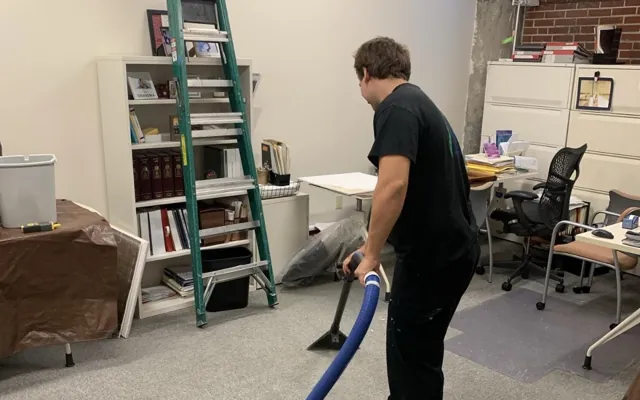
Weighted extraction wands pull water trapped in carpet and pad, and saturated materials are lifted or removed so water is not sealed under the surface.
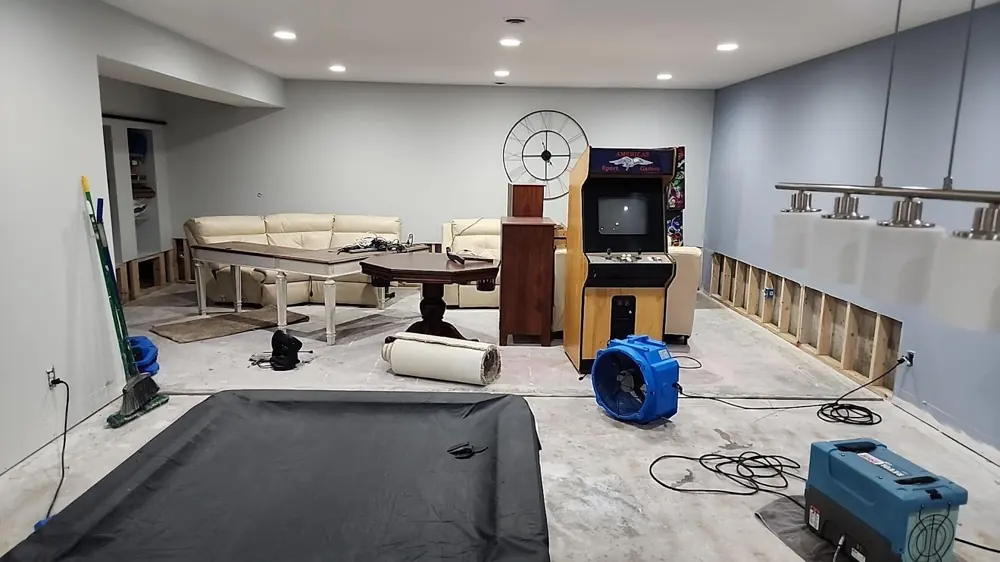
Meters and thermal imaging confirm how far the water traveled, then dehumidifiers and air movers are staged and readings are documented for the insurance claim.

While help is on the way, these first steps, done only where it is safe, limit the damage and protect the insurance claim.
Shut the supply off at the source, or close the home's main valve if the source is not obvious. Stopping the flow limits the damage more than anything else.
Switch off electricity to the affected area, but only if the breaker can be reached without standing in or touching the water.
Get a crew dispatched right away. The sooner extraction and drying begin, the more flooring, drywall, and belongings can be saved.
Take photos and a short video of the water and the affected rooms before anything is moved, so the insurance claim starts strong.
In St. Louis, water extraction typically runs from about $400 to $1,500 as part of a larger restoration job, depending on how much water there is, how far it spread, and how much has to be pulled from carpet and wall cavities. A small clean-water spill sits on the low end; a flooded finished basement with Category 3 water and multiple rooms sits on the high end. Extraction is usually one line item on a claim that also covers drying and repairs, and it is typically documented and billed direct to the insurance carrier.
Crews reach St. Louis city, St. Louis County, and the Metro East fast, from Soulard and Benton Park to Clayton, University City, Kirkwood, and Florissant. See the full list on the areas served across St. Louis page.
See all areas servedEvery loss is photographed, measured, and logged from the first visit, so the paperwork holds up with your insurance carrier.
Technicians follow recognized IICRC drying standards and prove the work with daily moisture readings, not guesswork.
Emergency dispatch any hour of the day or night, with a real crew on the way, not a callback in the morning.
A real crew dispatched any hour, not a callback in the morning.
Trained technicians following recognized IICRC drying standards.
Truck-mounted, portable, and submersible for any size loss.
The loss is documented and billed to the carrier directly.
Dispatch runs 24/7, and a St. Louis crew is typically at the door in about an hour. Extraction begins as soon as the area is confirmed safe, because the faster standing water is gone, the less material is lost.
Yes. Surface water that appears to be receding has usually soaked into pad, subfloor, and wall cavities, where it will not evaporate on its own. Mechanical extraction pulls that hidden water out so mold does not get a 24 to 48 hour head start.
Often, yes. Weighted extraction wands and lift-and-dry methods can save carpet when the water is clean and extraction happens quickly. Heavily soiled or Category 3 water usually means at least the pad has to go.
Sudden, accidental water losses are commonly covered, and extraction is typically one line on a claim that also includes drying and repairs. Moisture readings and photos are documented and can be billed direct to the carrier.
Extraction is step one. Dehumidifiers and air movers are staged immediately, moisture is mapped daily, and the structure is dried to a verified target so nothing wet ends up sealed behind a wall.
St. Louis crews are on call 24 hours a day, local and fast, and can be on the way within the hour.
Call (314) 762-6284