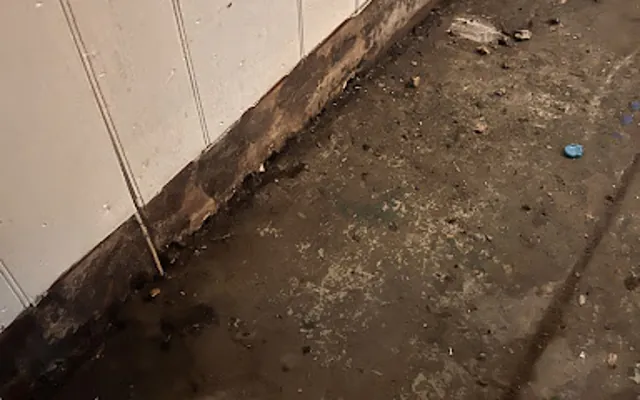
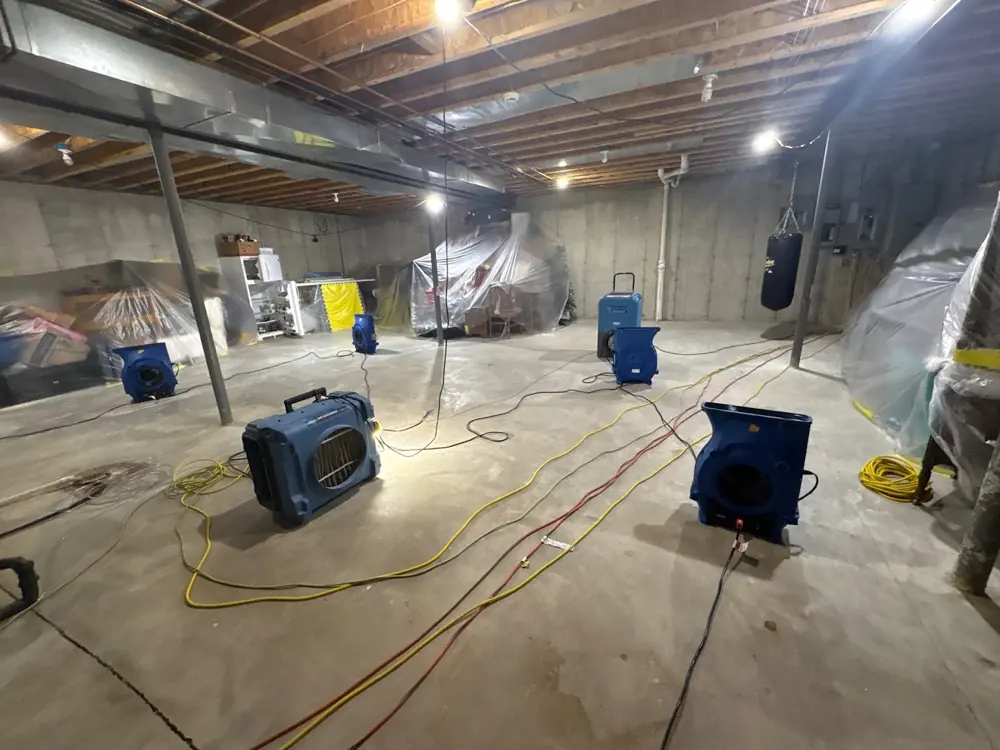
A blocked main drain forces gray or black water back into the lowest sinks, tubs, and floor drains in the house. Crews extract the contaminated water, decontaminate affected surfaces, and dry the space out.

The type of backup, gray or black water, gets assessed, standing contaminated water is extracted with hospital-grade equipment, and the affected area is sealed off to keep it from spreading.
Every surface that came into contact with the backup is cleaned and treated with an antimicrobial and antifungal solution following standard biohazard protocol.
Dehumidifiers and air movers run for seven to ten days to dry structural elements, subfloor, and any wall cavities that absorbed moisture.
A plumber locates and clears the blockage, repairs or replaces the damaged section of main drain, and tests the system before it goes back into use.

While help is on the way, these first steps, done only where it is safe, limit the damage and protect the insurance claim.
Shut the supply off at the source, or close the home's main valve if the source is not obvious. Stopping the flow limits the damage more than anything else.
Switch off electricity to the affected area, but only if the breaker can be reached without standing in or touching the water.
Get a crew dispatched right away. The sooner extraction and drying begin, the more flooring, drywall, and belongings can be saved.
Take photos and a short video of the water and the affected rooms before anything is moved, so the insurance claim starts strong.
Drain backup cleanup typically runs $2,500 to $6,000 or more, depending on how much contaminated water is involved, how many rooms it reached, and whether the main drain line itself needs replacement. Decontamination labor and materials make up most of that cost. Insurance typically covers a sudden drain backup and the water damage that comes with it, often bringing the out-of-pocket cost down to the deductible.
Crews reach St. Louis city, St. Louis County, and the Metro East fast, from Soulard and Benton Park to Clayton, University City, Kirkwood, and Florissant. See the full list on the areas served across St. Louis page.
See all areas servedEvery loss is photographed, measured, and logged from the first visit, so the paperwork holds up with your insurance carrier.
Technicians follow recognized IICRC drying standards and prove the work with daily moisture readings, not guesswork.
Emergency dispatch any hour of the day or night, with a real crew on the way, not a callback in the morning.
A real crew dispatched any hour, not a callback in the morning.
Trained technicians following recognized IICRC drying standards.
Truck-mounted, portable, and submersible for any size loss.
The loss is documented and billed to the carrier directly.
Gray water comes from sinks, showers, and washing machines and typically carries soap and everyday dirt, while black water comes from a toilet backup and carries harmful bacteria and viruses. Both call for professional handling rather than a DIY cleanup.
No. A sewage backup is a biohazard that needs protective equipment, hospital-grade cleaning solutions, and proper disposal of contaminated material. Exposure to the bacteria involved can cause real illness, so professional cleanup is the safer route every time.
Slow draining across multiple fixtures at once, a bad odor coming from a floor drain, or water backing up into the lowest sink or tub in the house are the usual early warning signs of a main line problem.
Most homeowner policies cover a sudden drain backup caused by tree roots or a collapsed pipe, though damage tied to years of neglect or lack of maintenance may not be. Filing the claim quickly with documentation from the cleanup helps it move faster.
Keeping grease out of the kitchen drain, disposing of paper products in the trash rather than flushing them, avoiding tree planting near the drain line, and having the main line inspected every five years by a plumber all cut down the risk significantly.
St. Louis crews are on call 24 hours a day, local and fast, and can be on the way within the hour.
Call (314) 762-6284