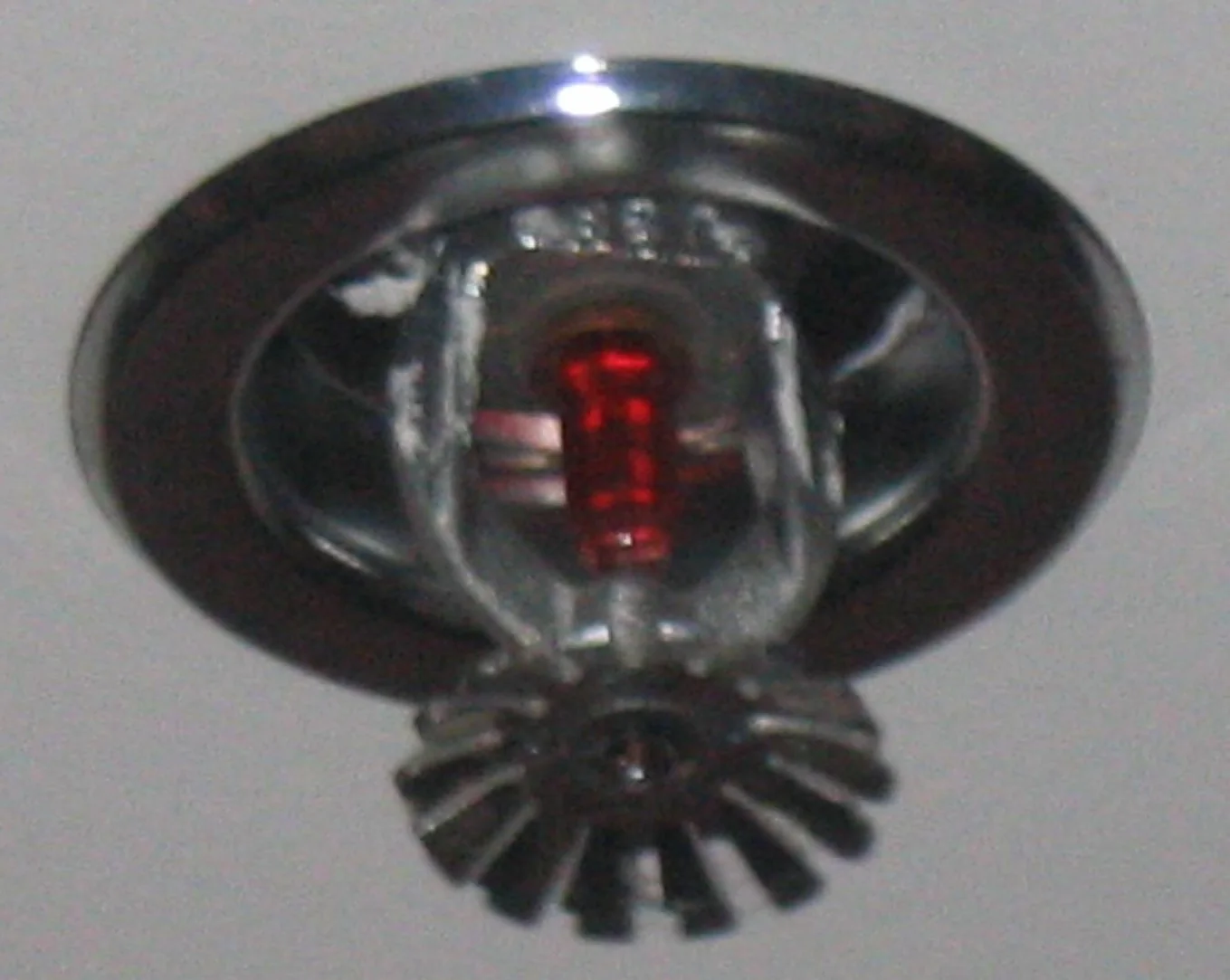
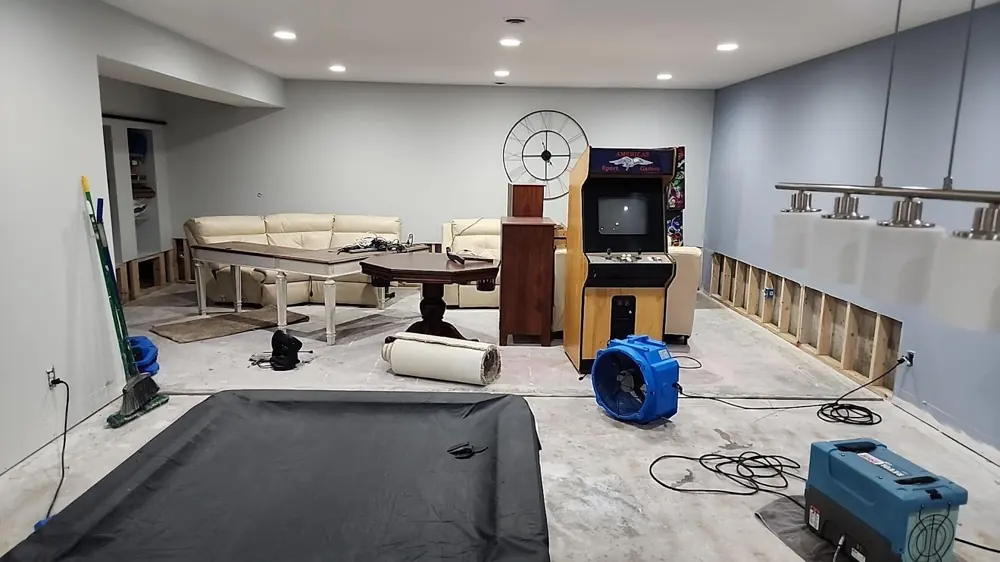
A fire sprinkler discharge can dump thousands of gallons into a building in minutes. Crews extract the water fast and dry the entire structure before mold gets a head start.

The main shut-off valve gets located and closed, and large-capacity pumps and extractors remove standing water from every affected area.
Walls, floors, ceilings, and the foundation are inspected for saturation, and industrial dehumidifiers and air movers are positioned throughout the building.
Moisture meters and hygrometers track progress daily, with drying typically taking five to ten days depending on the volume of water and the size of the building.
Preventive treatment is applied throughout, all damage is documented with photos, and reconstruction contractors are brought in for drywall, flooring, and rebuild work.

While help is on the way, these first steps, done only where it is safe, limit the damage and protect the insurance claim.
Shut the supply off at the source, or close the home's main valve if the source is not obvious. Stopping the flow limits the damage more than anything else.
Switch off electricity to the affected area, but only if the breaker can be reached without standing in or touching the water.
Get a crew dispatched right away. The sooner extraction and drying begin, the more flooring, drywall, and belongings can be saved.
Take photos and a short video of the water and the affected rooms before anything is moved, so the insurance claim starts strong.
Fire sprinkler discharge restoration in St. Louis can range from $3,000 to $15,000 or more, depending on how much water was released, the size of the building, and how much structural damage resulted. A modest residential discharge might land around $4,000 to $6,000, while a commercial building or a multi-story house can run past $10,000. Square footage affected, drying time, and whether structural repairs are needed are what drive the cost most. Discharge damage is typically covered under commercial property insurance or a homeowners policy with a sprinkler system rider.
Crews reach St. Louis city, St. Louis County, and the Metro East fast, from Soulard and Benton Park to Clayton, University City, Kirkwood, and Florissant. See the full list on the areas served across St. Louis page.
See all areas servedEvery loss is photographed, measured, and logged from the first visit, so the paperwork holds up with your insurance carrier.
Technicians follow recognized IICRC drying standards and prove the work with daily moisture readings, not guesswork.
Emergency dispatch any hour of the day or night, with a real crew on the way, not a callback in the morning.
A real crew dispatched any hour, not a callback in the morning.
Trained technicians following recognized IICRC drying standards.
Truck-mounted, portable, and submersible for any size loss.
The loss is documented and billed to the carrier directly.
Shutting off the water main comes first, then getting the fire department or building maintenance to stop the system, and calling for emergency water extraction right after that. Every hour of delay lets more water spread and soak deeper into the structure.
It can, since discharge floods a large area evenly and deeply all at once rather than pooling in one spot. Mold can start colonizing within 24 to 48 hours across that much wet material, which is why fast extraction and drying matter so much here.
A typical residential home takes five to ten days to dry fully, depending on the volume of water and the size of the building, while a larger commercial space can run seven to fourteen days.
Yes, accidental discharge is typically covered under a homeowners or commercial property policy. Reporting the damage right away with photos generally keeps the claim moving faster.
Homes, apartments, office buildings, warehouses, and retail spaces all get drying strategies scaled to their size and layout. Commercial discharge calls for larger equipment and closer coordination across the building, which gets planned out from the first walkthrough.
St. Louis crews are on call 24 hours a day, local and fast, and can be on the way within the hour.
Call (314) 762-6284