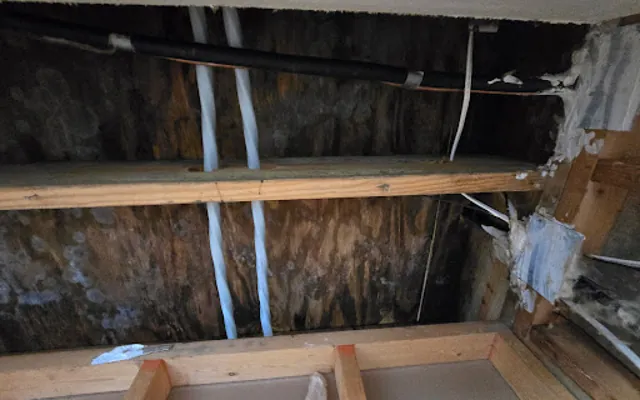
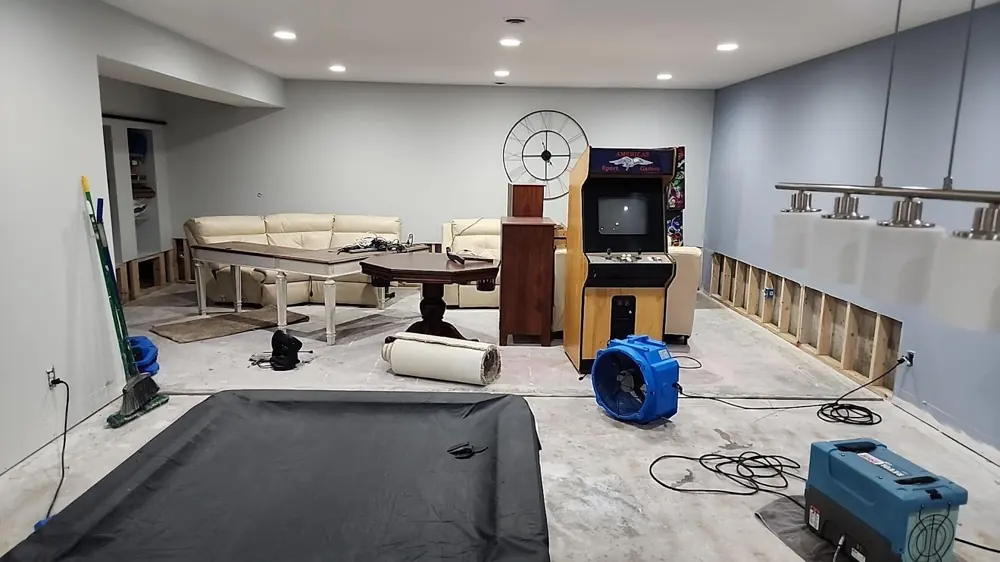
Winter ice dams push meltwater back under the shingles and into the attic below. Crews extract the water, dry the space even in freezing weather, and get ahead of mold before it starts.

Portable pumps and extraction equipment remove standing water from the attic floor and any pooled areas first.
Infrared imaging and moisture meters locate wet insulation, framing, and hidden pockets behind walls and above ceilings.
Industrial dehumidifiers, air movers, and heaters dry the attic over roughly five to seven days, running through freezing overnight temperatures without a break.
Testing for mold spores comes next, with preventive treatment where needed, and roof or insulation specialists are brought in for the permanent fix.

While help is on the way, these first steps, done only where it is safe, limit the damage and protect the insurance claim.
Shut the supply off at the source, or close the home's main valve if the source is not obvious. Stopping the flow limits the damage more than anything else.
Switch off electricity to the affected area, but only if the breaker can be reached without standing in or touching the water.
Get a crew dispatched right away. The sooner extraction and drying begin, the more flooring, drywall, and belongings can be saved.
Take photos and a short video of the water and the affected rooms before anything is moved, so the insurance claim starts strong.
Ice dam cleanup in St. Louis typically runs from about $1,500 to $4,000 for extraction and drying, depending on how much water reached the attic and how many ceiling cavities are affected. Insulation replacement and roof repair add to the total, and catching it early keeps costs down. A standard homeowners policy usually covers ice dam water damage when the roof itself is sound, though ventilation or maintenance exclusions are worth checking.
Crews reach St. Louis city, St. Louis County, and the Metro East fast, from Soulard and Benton Park to Clayton, University City, Kirkwood, and Florissant. See the full list on the areas served across St. Louis page.
See all areas servedEvery loss is photographed, measured, and logged from the first visit, so the paperwork holds up with your insurance carrier.
Technicians follow recognized IICRC drying standards and prove the work with daily moisture readings, not guesswork.
Emergency dispatch any hour of the day or night, with a real crew on the way, not a callback in the morning.
A real crew dispatched any hour, not a callback in the morning.
Trained technicians following recognized IICRC drying standards.
Truck-mounted, portable, and submersible for any size loss.
The loss is documented and billed to the carrier directly.
Thin attic insulation and limited ventilation let heat escape into the attic, which warms the roof deck and melts snow. That meltwater runs down and refreezes at the colder eaves, building up and backing water under the shingles.
Water stains on a ceiling, condensation on attic framing, or a musty smell are the usual signs, worth checking during or right after a dam forms.
Careful removal near the gutters can help in the moment, but better insulation and ventilation are what actually prevent ice dams long term. Climbing onto an icy roof is not worth the risk.
Drying typically takes five to seven days depending on how much water got in and how cold it stays, with heaters and dehumidifiers running continuously through winter weather.
Sudden water intrusion from an ice dam is typically covered, though damage traced to poor maintenance or ventilation may be treated differently. Reporting it quickly with photos helps the claim.
St. Louis crews are on call 24 hours a day, local and fast, and can be on the way within the hour.
Call (314) 762-6284