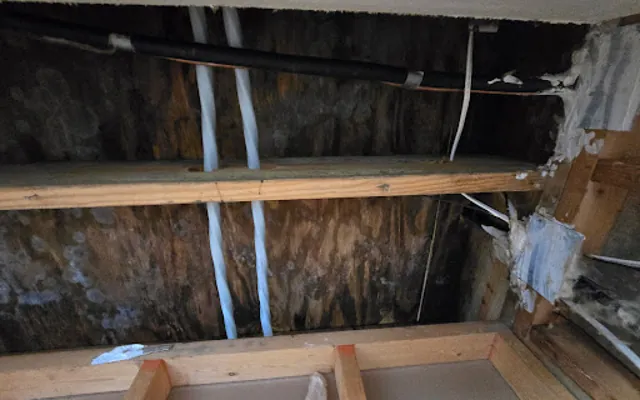
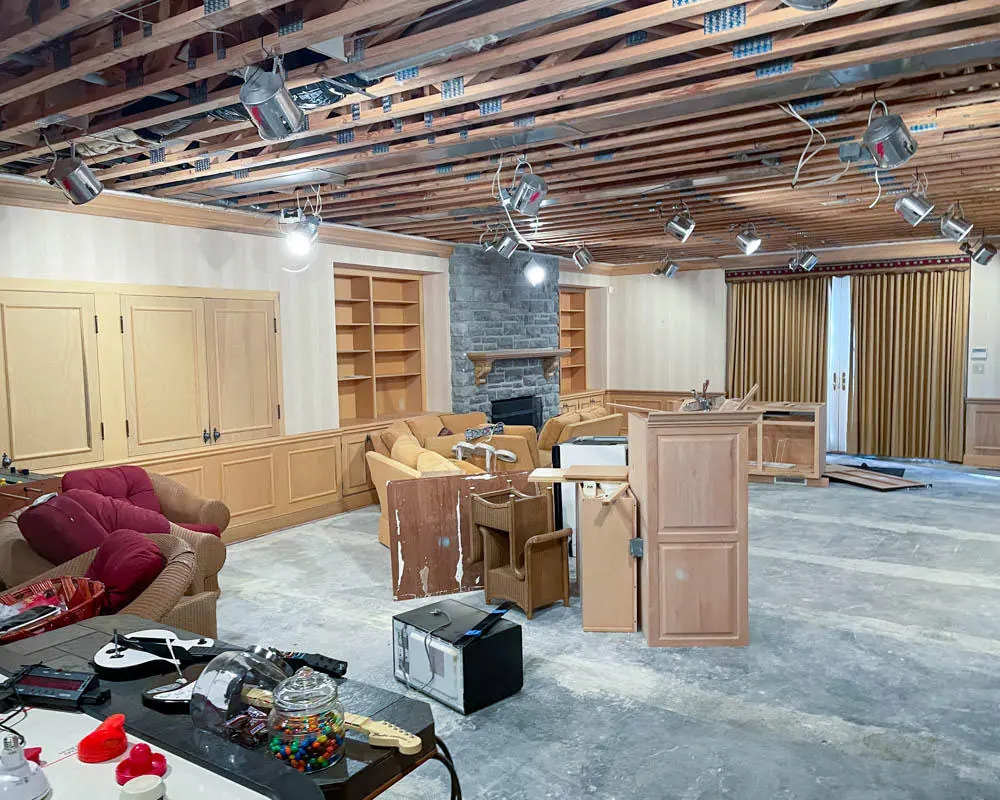
Spring storms push wind-driven rain under roof flashing and shingles, soaking attics and dripping through ceilings. Crews extract the water, dry the hidden spaces, and get ahead of mold.

The roof and attic are inspected to find where water is entering, trace how it traveled, and assess the damage to insulation, wood, and drywall.
Wet insulation is carefully removed, damaged drywall and flooring are taken out, and framing is treated to prevent mold before drying begins.
Industrial dehumidifiers and air movers dry the full attic space, wall cavities, and behind the ceiling drywall over roughly three to four days.
Once everything reads dry and clear of mold, ceiling drywall is repaired and painted, and the roofer handles the flashing and shingle repair.

While help is on the way, these first steps, done only where it is safe, limit the damage and protect the insurance claim.
Shut the supply off at the source, or close the home's main valve if the source is not obvious. Stopping the flow limits the damage more than anything else.
Switch off electricity to the affected area, but only if the breaker can be reached without standing in or touching the water.
Get a crew dispatched right away. The sooner extraction and drying begin, the more flooring, drywall, and belongings can be saved.
Take photos and a short video of the water and the affected rooms before anything is moved, so the insurance claim starts strong.
Roof leak cleanup typically runs from about $2,000 to $8,000, depending on how much attic and ceiling space was affected, how long the water sat, and whether framing replacement is needed. Water that traveled through a high ceiling or multiple stories pushes the cost higher. A standard homeowners policy commonly covers sudden roof leaks and the resulting interior water damage.
Crews reach St. Louis city, St. Louis County, and the Metro East fast, from Soulard and Benton Park to Clayton, University City, Kirkwood, and Florissant. See the full list on the areas served across St. Louis page.
See all areas servedEvery loss is photographed, measured, and logged from the first visit, so the paperwork holds up with your insurance carrier.
Technicians follow recognized IICRC drying standards and prove the work with daily moisture readings, not guesswork.
Emergency dispatch any hour of the day or night, with a real crew on the way, not a callback in the morning.
A real crew dispatched any hour, not a callback in the morning.
Trained technicians following recognized IICRC drying standards.
Truck-mounted, portable, and submersible for any size loss.
The loss is documented and billed to the carrier directly.
A roof leak can hide inside an attic or wall cavity for weeks or months before a visible ceiling stain appears, and mold growth speeds up after 24 to 48 hours of moisture, so early detection matters.
Not always. Wind-driven water can travel along rafters or insulation and pool well away from where it entered, which is why professional moisture mapping is used to find every affected area.
Sudden roof leaks and the resulting interior water damage are typically covered, though the roof repair itself is usually only covered when the damage is sudden and storm-related.
Getting water extraction and a damage assessment started right away, then bringing in a roofer to fix the source, keeps both mold and structural damage from compounding.
Wet insulation is removed, wood framing is treated, and industrial dehumidifiers and air movers built for attic spaces run for roughly three to four days until moisture readings confirm the space is dry.
St. Louis crews are on call 24 hours a day, local and fast, and can be on the way within the hour.
Call (314) 762-6284