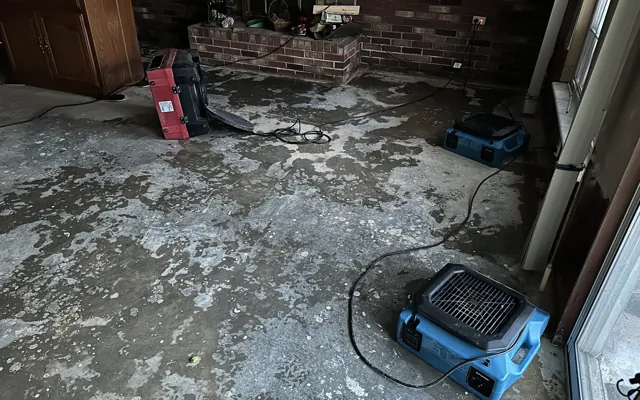
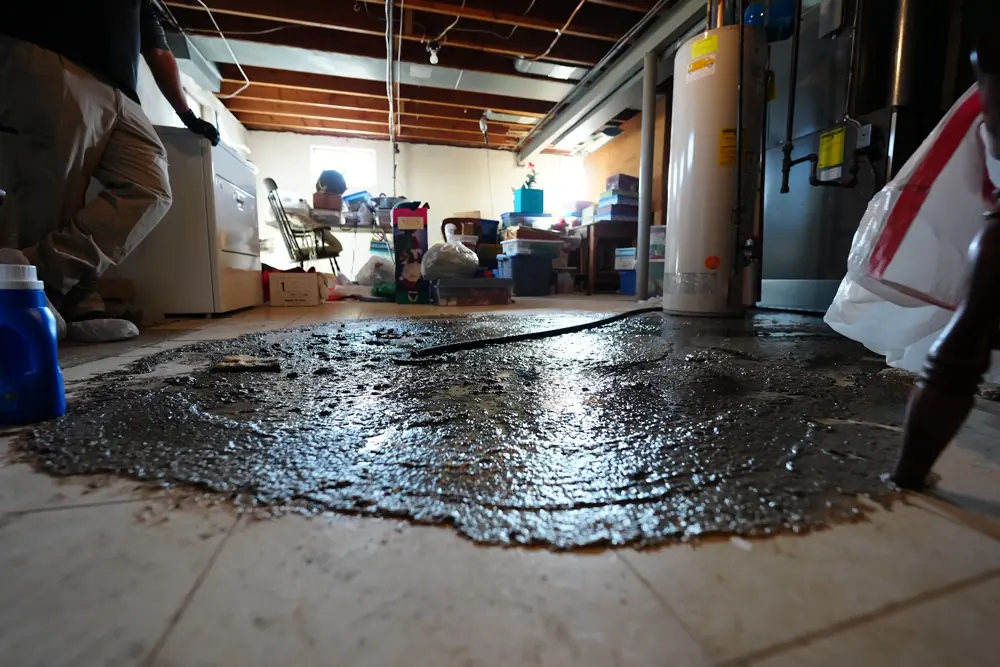
St. Louis gets hit by fast-moving Midwest thunderstorms, flash flooding near creeks, and wind-driven rain that finds every weak point in an older roof. Crews arrive within about an hour for extraction and emergency mitigation.

Crews typically arrive within 1 to 2 hours for an initial read on water level, utility safety, and hazards before work starts.
Truck-mounted and portable pumps remove standing water, with sump and basement pump-out running at the same time.
Roof tarping, airflow through open windows, removal of wet contents, and setup of industrial drying equipment happen in the same visit.
Moisture is monitored daily, dehumidifiers and fans run continuously, mold-risk areas are flagged, and the damage is documented.

While help is on the way, these first steps, done only where it is safe, limit the damage and protect the insurance claim.
Shut the supply off at the source, or close the home's main valve if the source is not obvious. Stopping the flow limits the damage more than anything else.
Switch off electricity to the affected area, but only if the breaker can be reached without standing in or touching the water.
Get a crew dispatched right away. The sooner extraction and drying begin, the more flooring, drywall, and belongings can be saved.
Take photos and a short video of the water and the affected rooms before anything is moved, so the insurance claim starts strong.
Storm water cleanup in St. Louis ranges from about $2,000 to $15,000, depending on flood volume, how much of the home is affected, and how quickly mitigation starts. Flooding across multiple floors or a finished basement runs toward the higher end. Homeowners insurance commonly covers sudden loss from storms and wind-driven rain, minus the deductible, and work can typically begin right away under emergency provisions while the claim is still being processed.
Crews reach St. Louis city, St. Louis County, and the Metro East fast, from Soulard and Benton Park to Clayton, University City, Kirkwood, and Florissant. See the full list on the areas served across St. Louis page.
See all areas servedEvery loss is photographed, measured, and logged from the first visit, so the paperwork holds up with your insurance carrier.
Technicians follow recognized IICRC drying standards and prove the work with daily moisture readings, not guesswork.
Emergency dispatch any hour of the day or night, with a real crew on the way, not a callback in the morning.
A real crew dispatched any hour, not a callback in the morning.
Trained technicians following recognized IICRC drying standards.
Truck-mounted, portable, and submersible for any size loss.
The loss is documented and billed to the carrier directly.
Electrical breakers to flooded areas should be shut off to prevent shock hazard, and valuables should move to a higher floor. Call (314) 762-6284 right away, and avoid entering a basement with rising water or exposed wiring until a crew confirms it's safe.
Mold can begin growing within 24 to 48 hours in a warm, humid environment, which is why fast extraction and drying matter more than almost anything else in the first day after a storm.
Sudden water damage from storms, wind-driven rain, and roof leaks is typically covered, minus the deductible. Flood damage from rising external floodwater or poor drainage often falls outside a standard policy and needs separate flood coverage.
A water damage crew first, in most cases, since tarping the roof and starting extraction stops the bleeding immediately. A roofer can be brought in afterward, once the emergency is stabilized, to plan the permanent repair.
Most homes dry within 7 to 10 days when extraction happens fast and drying equipment runs continuously. Larger homes with heavy saturation can take 10 to 14 days, and daily moisture checks keep the process on track.
St. Louis crews are on call 24 hours a day, local and fast, and can be on the way within the hour.
Call (314) 762-6284