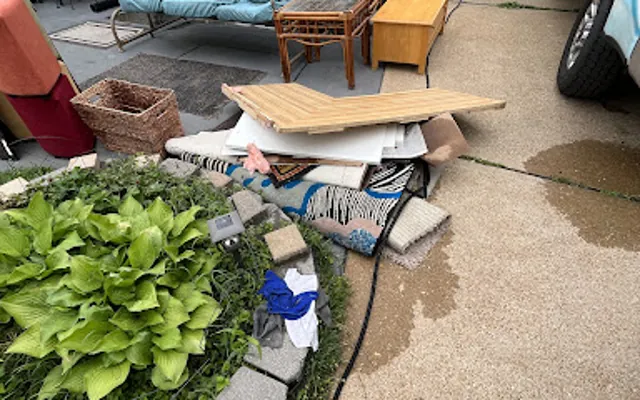
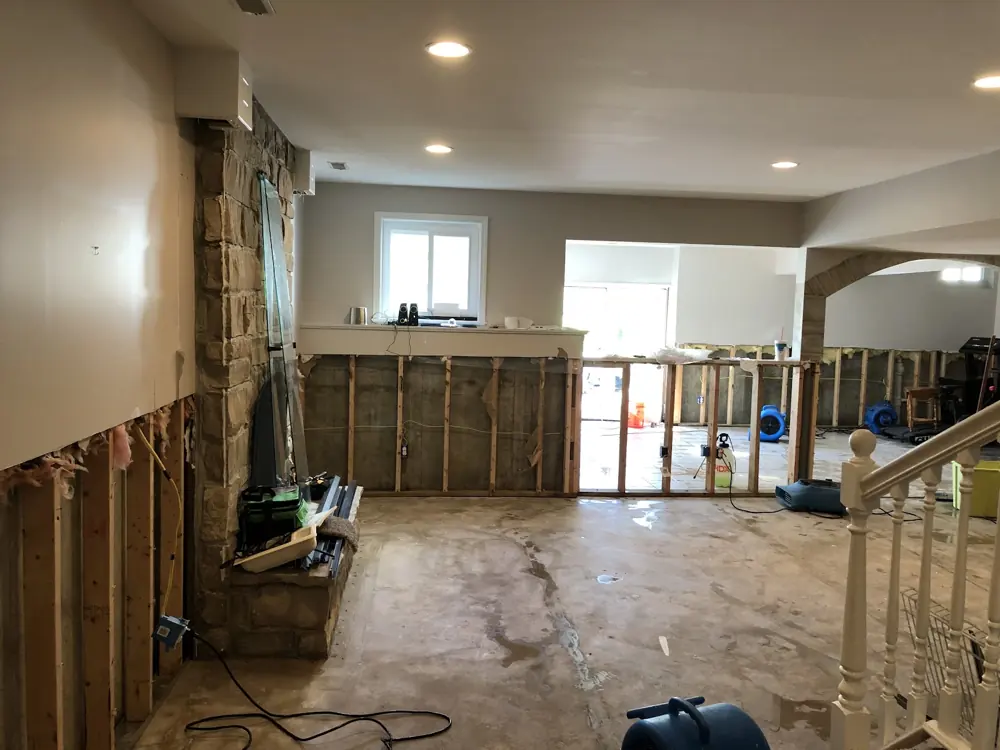
A broken water main or service line floods a home fast, with no warning and no regard for anyone's schedule. Crews deploy for emergency extraction, drying, and restoration across St. Louis.

Truck-mounted and portable extractors remove standing water from all affected areas within the first hour.
Framing, subflooring, and foundation are inspected for saturation levels and hidden water pockets.
Industrial dehumidifiers, high-speed air movers, and monitoring equipment dry the structure over 3 to 7 days depending on severity.
Once dry and mold-checked, rebuilding of flooring, drywall, and finishes is coordinated.

While help is on the way, these first steps, done only where it is safe, limit the damage and protect the insurance claim.
Shut the supply off at the source, or close the home's main valve if the source is not obvious. Stopping the flow limits the damage more than anything else.
Switch off electricity to the affected area, but only if the breaker can be reached without standing in or touching the water.
Get a crew dispatched right away. The sooner extraction and drying begin, the more flooring, drywall, and belongings can be saved.
Take photos and a short video of the water and the affected rooms before anything is moved, so the insurance claim starts strong.
Water main break cleanup in St. Louis typically ranges from $2,000 to $8,000, depending on the volume of water, the square footage affected, and whether contamination or mold is present. Large basements or flooding across multiple rooms can push past $8,000. The biggest cost drivers are water volume, drying time, and whether structural repairs are needed. Homeowners insurance commonly covers a water main break in full, including emergency extraction and drying.
Crews reach St. Louis city, St. Louis County, and the Metro East fast, from Soulard and Benton Park to Clayton, University City, Kirkwood, and Florissant. See the full list on the areas served across St. Louis page.
See all areas servedEvery loss is photographed, measured, and logged from the first visit, so the paperwork holds up with your insurance carrier.
Technicians follow recognized IICRC drying standards and prove the work with daily moisture readings, not guesswork.
Emergency dispatch any hour of the day or night, with a real crew on the way, not a callback in the morning.
A real crew dispatched any hour, not a callback in the morning.
Trained technicians following recognized IICRC drying standards.
Truck-mounted, portable, and submersible for any size loss.
The loss is documented and billed to the carrier directly.
Crews typically dispatch within 30 to 60 minutes of the call and begin extraction immediately. Call (314) 762-6284 anytime, day or night.
Mold can begin growing within 24 to 48 hours in humid conditions. Fast extraction and proper drying prevent it, with moisture levels monitored continuously until the space is verified dry.
Most policies cover a sudden break in the water main or service line, including emergency extraction and drying, and the claim is documented to support the adjuster's review.
Drying typically takes 3 to 7 days depending on water volume, room size, and humidity, with moisture meters and daily monitoring tracking progress.
Extraction and drying work the same way once a slab leak is found. Locating and repairing a pinhole leak under a slab is a job for a plumber who specializes in that kind of repiping.
St. Louis crews are on call 24 hours a day, local and fast, and can be on the way within the hour.
Call (314) 762-6284