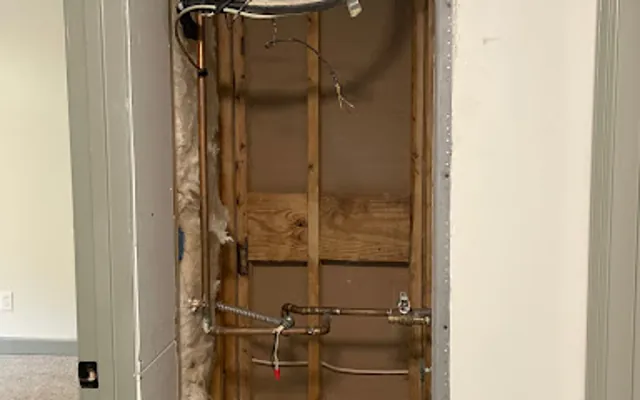
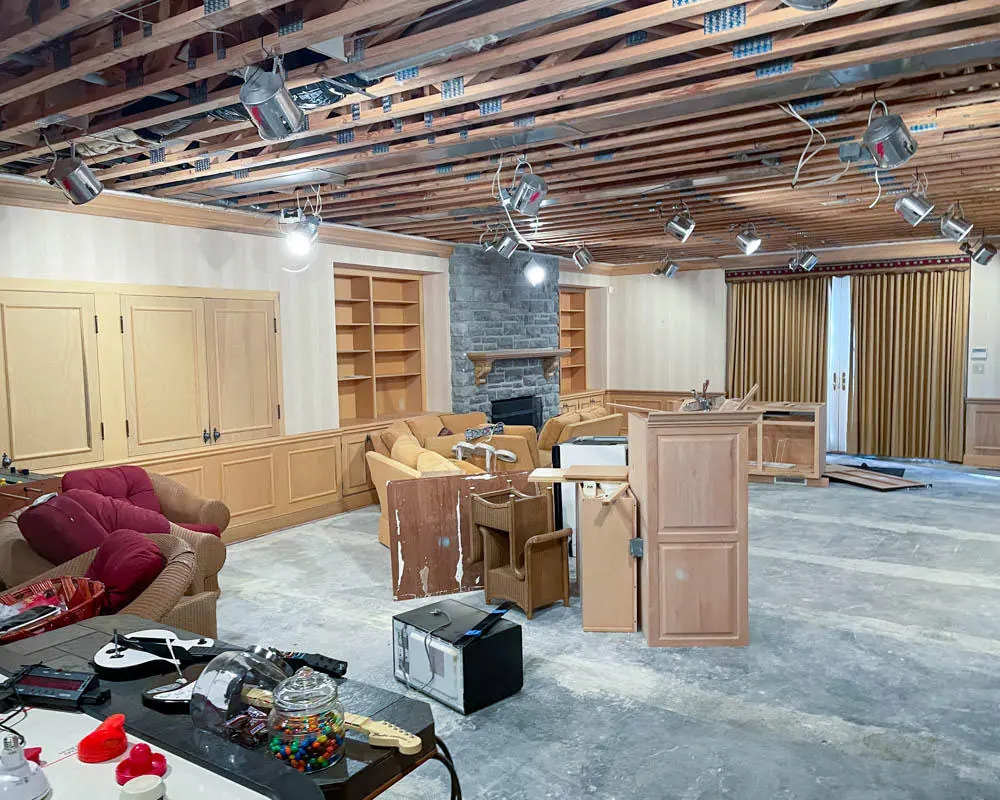
A braided supply line to a toilet, sink, or washer can fail without warning, and the flooding that follows soaks cabinets and floors in minutes. Dispatch runs 24/7 for emergency extraction.

The failed line is isolated, the main water supply is shut off if needed, and saturation and affected materials are evaluated.
Cabinets are drained, standing water is pumped, and moisture is extracted from subfloor and cavities with wet vacuums.
Dehumidifiers and air movers go in, saturated insulation and particleboard are removed, and exposed wood is treated with an antimicrobial.
Drywall, flooring, and cabinets are replaced as needed and repainted, with a plumber coordinated for line repair or replacement.

While help is on the way, these first steps, done only where it is safe, limit the damage and protect the insurance claim.
Shut the supply off at the source, or close the home's main valve if the source is not obvious. Stopping the flow limits the damage more than anything else.
Switch off electricity to the affected area, but only if the breaker can be reached without standing in or touching the water.
Get a crew dispatched right away. The sooner extraction and drying begin, the more flooring, drywall, and belongings can be saved.
Take photos and a short video of the water and the affected rooms before anything is moved, so the insurance claim starts strong.
Supply line failure cleanup in St. Louis typically runs $1,200 to $5,000, depending on water volume, how far it spread, and what materials need replacing. Saturated particleboard cabinets and subfloor push costs higher. The supply line replacement itself is billed separately by the plumber and generally runs $150 to $400 per line. Homeowners insurance commonly covers a sudden supply line rupture under dwelling coverage, minus the deductible, and the loss is documented to support the claim.
Crews reach St. Louis city, St. Louis County, and the Metro East fast, from Soulard and Benton Park to Clayton, University City, Kirkwood, and Florissant. See the full list on the areas served across St. Louis page.
See all areas servedEvery loss is photographed, measured, and logged from the first visit, so the paperwork holds up with your insurance carrier.
Technicians follow recognized IICRC drying standards and prove the work with daily moisture readings, not guesswork.
Emergency dispatch any hour of the day or night, with a real crew on the way, not a callback in the morning.
A real crew dispatched any hour, not a callback in the morning.
Trained technicians following recognized IICRC drying standards.
Truck-mounted, portable, and submersible for any size loss.
The loss is documented and billed to the carrier directly.
Braided supply lines are built for a 10 to 15 year service life. Plenty that are 20 or more years old have already failed. A home built before 2010 with original supply lines is a good candidate for preventive replacement.
Braided lines are flexible and easy to route but weaker, since water can escape through the braiding itself. Solid copper or PEX lines hold up longer. For appliances, rigid copper tends to be the more durable long-term choice.
Largely, yes. Replacing braided supply lines every 10 to 15 years, installing shut-off valves under sinks and behind washing machines, checking lines annually for bulges or cracks, and adding water-detection sensors near appliances all reduce the risk.
A burst line can discharge over 100 gallons an hour, and damage to cabinets and subfloor starts within 30 minutes. Mold risk climbs after 24 to 48 hours of continued wetness, so acting fast matters.
Sudden loss from a burst or failed supply line is typically covered under dwelling protection, minus the deductible. The damage is documented in detail to support the claims process.
St. Louis crews are on call 24 hours a day, local and fast, and can be on the way within the hour.
Call (314) 762-6284