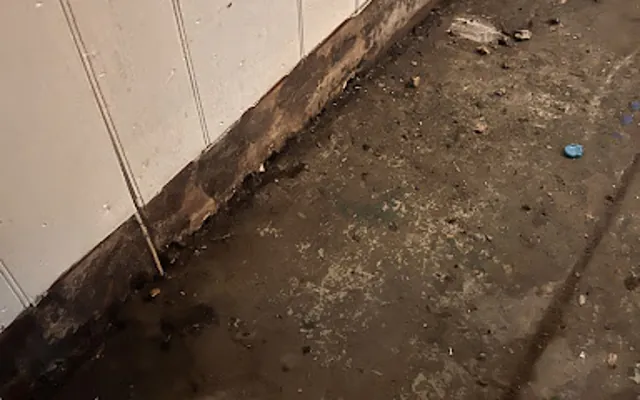
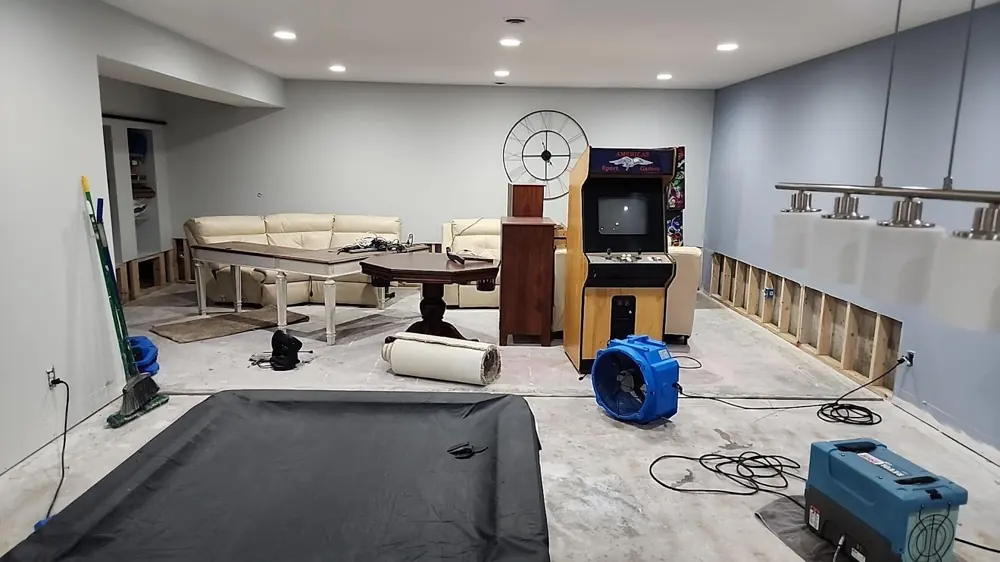
A toilet clog or backup can push contaminated water into subfloors and adjacent rooms within minutes. Crews extract category 2 and 3 water, disinfect, and restore what it reached.

Crews arrive quickly with truck-mounted equipment to pump out standing water and waste, removing the contamination source first.
Damaged drywall, carpet, and contaminated material are safely removed and disposed of, and every affected surface is treated with a hospital-grade disinfectant.
Dehumidifiers and air movers dry subflooring, joists, and wall cavities completely to prevent a hidden moisture pocket from being sealed in.
Once the area is confirmed dry and clear of mold, flooring is rebuilt, new drywall goes in, and the bathroom is restored to its prior condition.

While help is on the way, these first steps, done only where it is safe, limit the damage and protect the insurance claim.
Shut the supply off at the source, or close the home's main valve if the source is not obvious. Stopping the flow limits the damage more than anything else.
Switch off electricity to the affected area, but only if the breaker can be reached without standing in or touching the water.
Get a crew dispatched right away. The sooner extraction and drying begin, the more flooring, drywall, and belongings can be saved.
Take photos and a short video of the water and the affected rooms before anything is moved, so the insurance claim starts strong.
Toilet overflow cleanup typically costs between 1,500 and 6,000 dollars, depending on how much contaminated water spread, how far it traveled, and what materials need replacing. Damage to subfloors and structural elements pushes cost higher. Homeowners insurance commonly covers category 2 and 3 water damage from an internal overflow, subject to the deductible.
Crews reach St. Louis city, St. Louis County, and the Metro East fast, from Soulard and Benton Park to Clayton, University City, Kirkwood, and Florissant. See the full list on the areas served across St. Louis page.
See all areas servedEvery loss is photographed, measured, and logged from the first visit, so the paperwork holds up with your insurance carrier.
Technicians follow recognized IICRC drying standards and prove the work with daily moisture readings, not guesswork.
Emergency dispatch any hour of the day or night, with a real crew on the way, not a callback in the morning.
A real crew dispatched any hour, not a callback in the morning.
Trained technicians following recognized IICRC drying standards.
Truck-mounted, portable, and submersible for any size loss.
The loss is documented and billed to the carrier directly.
Yes. It carries bacteria and viruses, and category 2 or 3 water, the gray or black kind, poses a real health risk that calls for protective equipment during cleanup.
Within the first hour, ideally. The longer contaminated water sits, the deeper it penetrates flooring and subfloor. Calling (314) 762-6284 right away limits both the damage and the mold risk.
Most policies cover a sudden overflow from an internal plumbing failure, though coverage details vary by policy. The damage is documented to help the claim move through the adjuster.
It isn't safe to try. Contaminated water needs protective gear, disinfection equipment, and proper disposal. A DIY cleanup tends to spread pathogens and miss hidden moisture that leads to mold later.
Mold can start within 24 to 48 hours, structural damage worsens, and health hazards increase the longer it sits. Untreated contamination can make a space unsafe and require far more expensive remediation down the line.
St. Louis crews are on call 24 hours a day, local and fast, and can be on the way within the hour.
Call (314) 762-6284