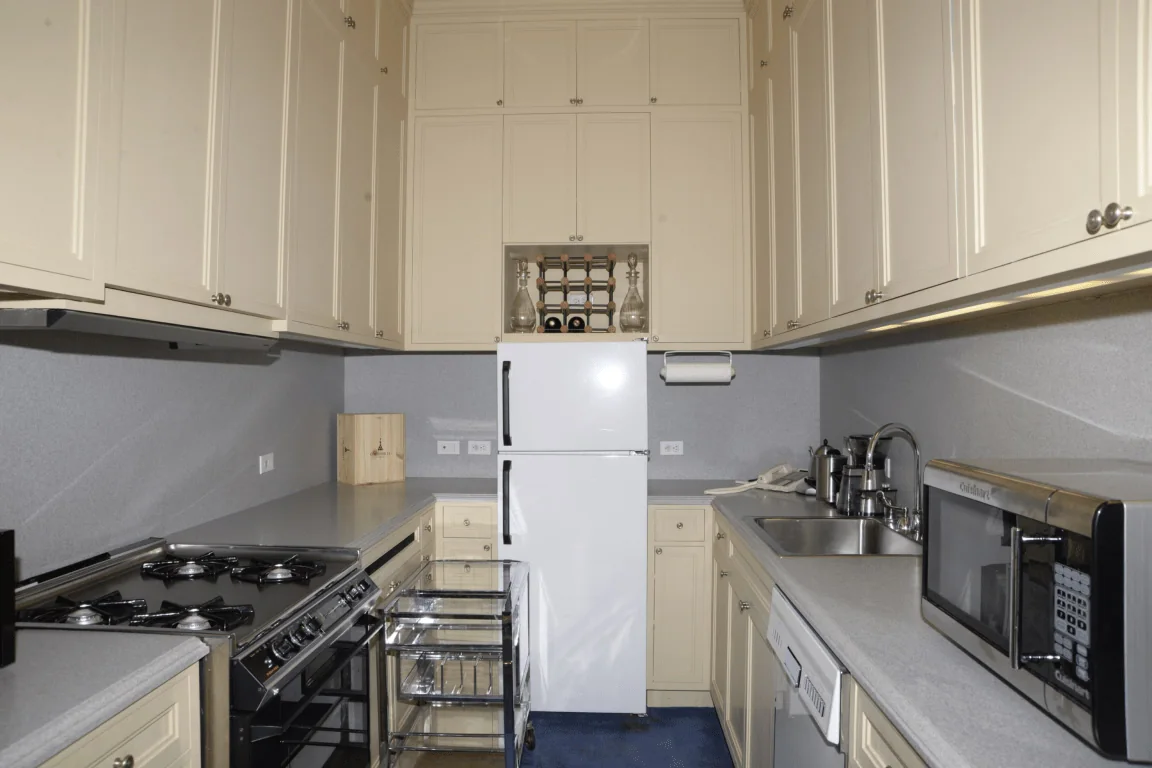
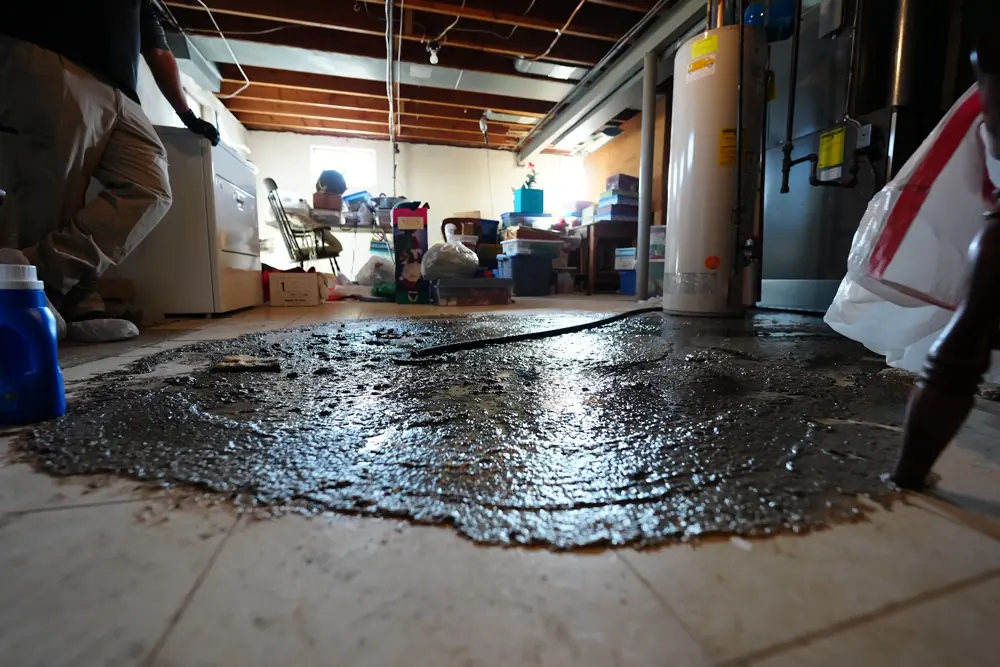
A cracked ice-maker line or a clogged defrost drain lets water pool under the refrigerator for days before it is noticed. Crews extract the water, dry the subfloor, and get the kitchen back to normal.

Standing water is removed from under the refrigerator, behind cabinets, and from the crawlspace below with shop vacuums and portable pumps.
Hardwood, plywood, or concrete subfloor is checked for saturation, and moisture readings set the drying timeline.
Commercial dehumidifiers and air movers are positioned to dry subflooring and wall cavities over roughly three to five days.
Surfaces are monitored for mold, with preventive treatment applied where needed, followed by coordinated flooring and cabinet repair.

While help is on the way, these first steps, done only where it is safe, limit the damage and protect the insurance claim.
Shut the supply off at the source, or close the home's main valve if the source is not obvious. Stopping the flow limits the damage more than anything else.
Switch off electricity to the affected area, but only if the breaker can be reached without standing in or touching the water.
Get a crew dispatched right away. The sooner extraction and drying begin, the more flooring, drywall, and belongings can be saved.
Take photos and a short video of the water and the affected rooms before anything is moved, so the insurance claim starts strong.
Refrigerator leak cleanup in St. Louis typically runs from about $1,200 to $3,500, depending on how long the leak was active and how much subflooring is affected. Flooring replacement or refinishing adds to the total. A leak caught early costs far less than one that has soaked into joists or a crawlspace, and sudden mechanical failures are often covered under a standard homeowners policy, though appliance coverage varies by policy.
Crews reach St. Louis city, St. Louis County, and the Metro East fast, from Soulard and Benton Park to Clayton, University City, Kirkwood, and Florissant. See the full list on the areas served across St. Louis page.
See all areas servedEvery loss is photographed, measured, and logged from the first visit, so the paperwork holds up with your insurance carrier.
Technicians follow recognized IICRC drying standards and prove the work with daily moisture readings, not guesswork.
Emergency dispatch any hour of the day or night, with a real crew on the way, not a callback in the morning.
A real crew dispatched any hour, not a callback in the morning.
Trained technicians following recognized IICRC drying standards.
Truck-mounted, portable, and submersible for any size loss.
The loss is documented and billed to the carrier directly.
Water pooling under the fridge, a musty smell nearby, or warping in the surrounding flooring are the usual clues, often showing up after the defrost cycle runs late at night or early morning.
Refrigerators are heavy and can damage flooring or plumbing connections if moved improperly, so it is safer to call for a professional inspection at (314) 762-6284 and let the unit be pulled and checked correctly.
Mold can begin within 24 to 48 hours, especially under an appliance where humidity runs high, which is why fast extraction and drying matter.
A crawlspace traps moisture and mold grows quickly in damp soil and wood joists, so standing water gets pumped out and the space dried with crawlspace-specific equipment.
Some policies cover a sudden appliance leak, while a slow drip tied to deferred maintenance usually is not. Reporting it to the insurer right away helps clarify coverage.
St. Louis crews are on call 24 hours a day, local and fast, and can be on the way within the hour.
Call (314) 762-6284