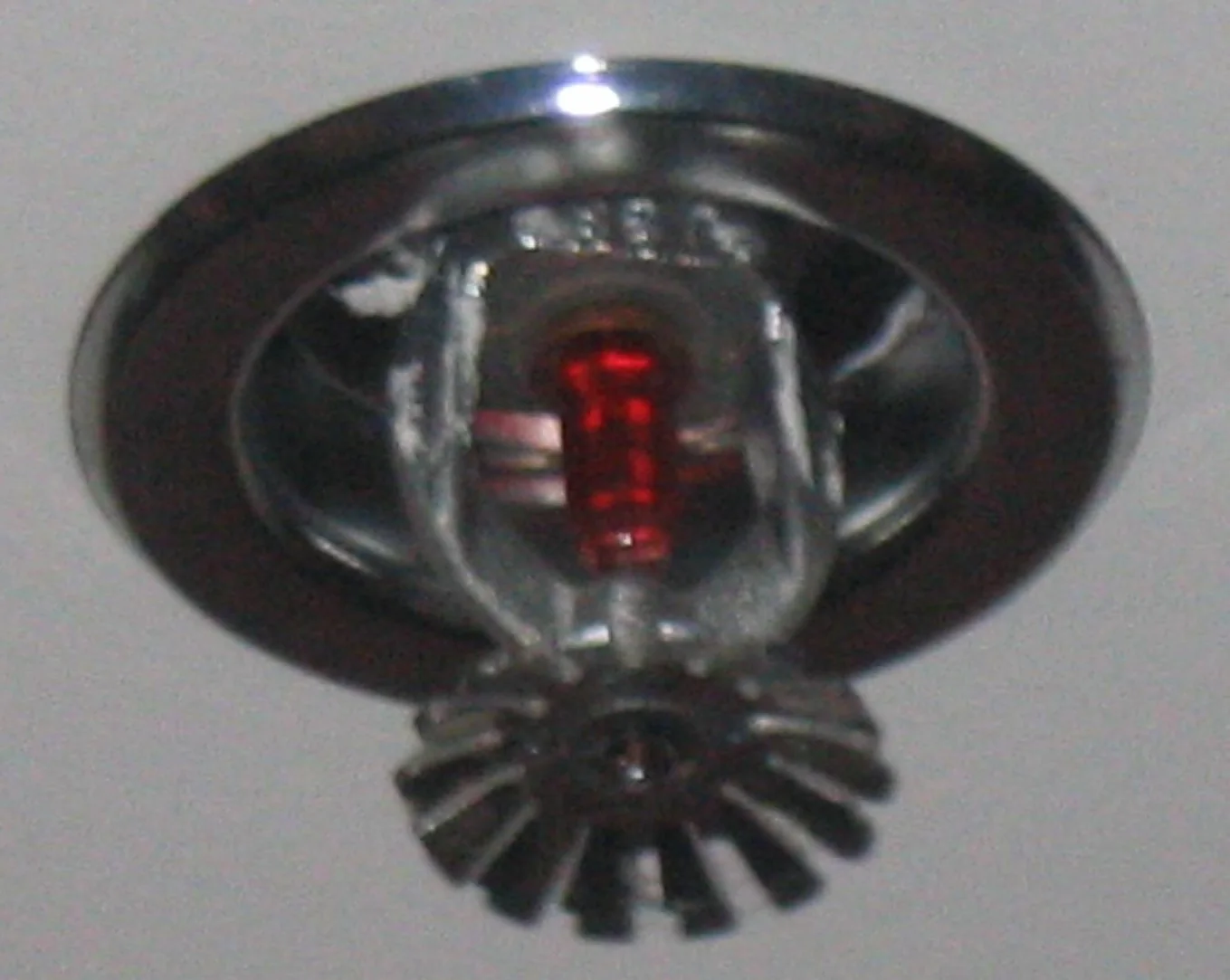
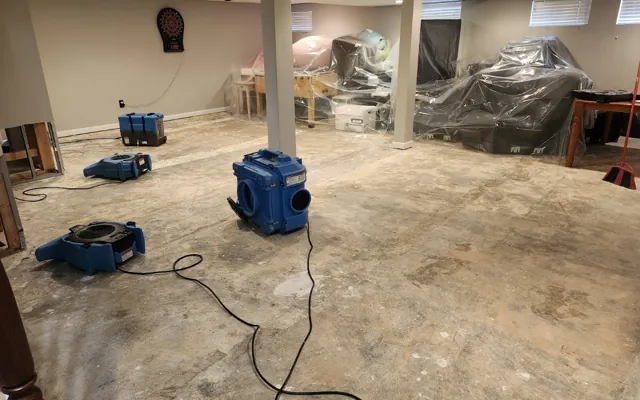
Collinsville, IL fire sprinkler discharge damage recovery by IICRC-standard restoration specialists. Fast emergency response, complete water extraction, professional structural drying.

Crews shut off the sprinkler system immediately and deploy large-capacity extractors sized for Collinsville's multi-source water problems. Storm sewer backup plus discharge requires aggressive water removal to prevent saturation cascade into brick structures.
The team inspects your brick foundation, identifies pre-existing seepage patterns from ground-water pressure, and assesses how discharge water has migrated through Collinsville's clay-based soil conditions. Crews evaluate sewer-backup risk ongoing.
Crews position dehumidifiers rated for Mississippi River valley humidity levels and return daily to monitor progress. Collinsville homes typically require six to ten days to reach safe moisture levels due to ambient ground-water and humidity conditions.

Fire sprinkler discharge restoration in Collinsville can range from $3,000 to $15,000 or more, depending on how much water was released, the size of the building, and how much structural damage resulted. A modest residential discharge might land around $4,000 to $6,000, while a commercial building or a multi-story house can run past $10,000. Square footage affected, drying time, and whether structural repairs are needed are what drive the cost most. Discharge damage is typically covered under commercial property insurance or a homeowners policy with a sprinkler system rider.
Collinsville, a major Illinois Metro East hub in the Mississippi River valley, experiences unique water damage patterns from regional precipitation and soil composition conditions. Sewer capacity overwhelms during heavy storms, backing water into older brick residential basements where fire sprinkler discharge can make saturation worse. Foundation seepage is endemic to Collinsville's geological conditions and aging municipal infrastructure, creating year-round basement moisture challenges. Collinsville sits on Mississippi River valley geology with high water tables, clay-rich soil, and seasonal flooding patterns. The region's sewer infrastructure regularly backs up during heavy storms, pushing water into basement foundations. When fire sprinkler discharge occurs, it combines with ambient ground-water pressure and sewer-backup risk, creating multi-source saturation that spreads rapidly in Collinsville's brick homes. From Collinsville, crews also cover nearby Kirkwood, Fairview Heights, Florissant, Mehlville, Swansea, Belleville. See every neighborhood and town on the full service area page.
See all areas servedEvery loss is photographed, measured, and logged from the first visit, so the paperwork holds up with your insurance carrier.
Technicians follow recognized IICRC drying standards and prove the work with daily moisture readings, not guesswork.
Emergency dispatch any hour of the day or night, with a real crew on the way, not a callback in the morning.
A real crew dispatched any hour, not a callback in the morning.
Trained technicians following recognized IICRC drying standards.
Truck-mounted, portable, and submersible for any size loss.
The loss is documented and billed to the carrier directly.
Valley geology and high water tables create constant ground-water pressure against Collinsville basement foundations. Discharge water adds to existing saturation conditions. The drying strategy in Collinsville accounts for ongoing moisture pressure and runs dehumidifiers longer than in drier regions.
Yes, frequently. Heavy rains cause both sewer systems to overwhelm and fire sprinkler pressure to fluctuate. When both happen together in Collinsville, water enters from above and below simultaneously. The extraction crew handles multi-source water removal as standard practice in the Metro East area.
Crews are on call 24 hours a day and can be on the way to Collinsville within the hour.
Call (314) 762-6284