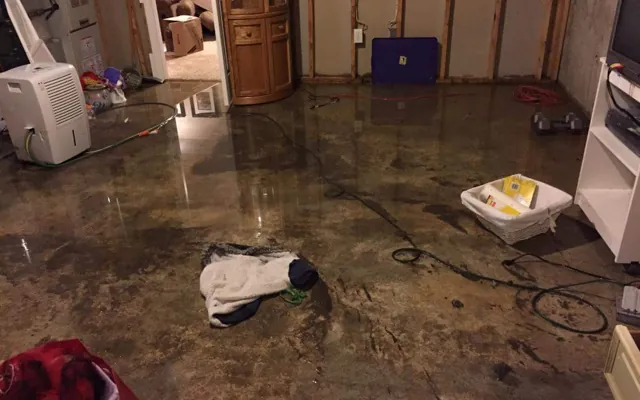
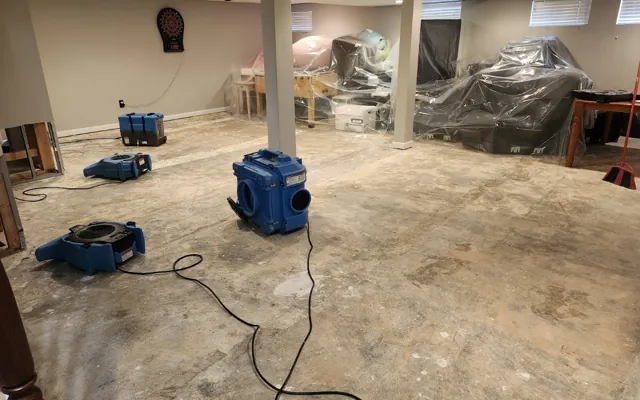
Water heater leak restoration in Central West End, MO within one hour. IICRC-standard crews handle historic buildings and modern high-rises with equal expertise.

Crews inspect heater connections and shared supply lines, then isolate the water source. In high-rises, crews coordinate with building management to identify which floors or units are affected before extraction begins.
Using truck-mounted and portable equipment, crews extract standing water and pull wet insulation, drywall, and finishes. The old basement waterproofing in historic buildings often fails alongside the heater, requiring additional attention.
Thermal imaging identifies water trapped behind walls. Dehumidifiers and air movers run until Central West End's humidity is matched and moisture content is verified safe in all affected materials and building cavities.

Water heater leak cleanup typically runs 1,200 to 4,500 dollars, depending on how much water was released, how far it spread, and whether subflooring or structural material needs replacing. Drying concrete adds both time and equipment cost. Homeowners insurance commonly covers sudden tank failure and the resulting water damage to contents and structure, subject to the deductible.
Central West End mixes grand old apartment buildings and mansions with newer high-rise condo towers, so water damage here comes from two directions at once. The historic buildings carry old basement waterproofing that struggles under heavy rain, while the high-rises depend on shared supply lines and rooftop mechanical systems that can fail many floors above a unit. Either way, a slow leak can spread through walls before anyone notices. Central West End's mix of aged basement waterproofing and modern shared plumbing creates dual water risks. Heavy storms overload old drainage while system failures in high-rises spread damage across multiple units, making fast response and precise detection essential. From Central West End, crews also cover nearby Tower Grove East, Shaw, Tower Grove South, Cahokia, Forest Park Southeast, East Saint Louis. See every neighborhood and town on the full service area page.
See all areas servedEvery loss is photographed, measured, and logged from the first visit, so the paperwork holds up with your insurance carrier.
Technicians follow recognized IICRC drying standards and prove the work with daily moisture readings, not guesswork.
Emergency dispatch any hour of the day or night, with a real crew on the way, not a callback in the morning.
A real crew dispatched any hour, not a callback in the morning.
Trained technicians following recognized IICRC drying standards.
Truck-mounted, portable, and submersible for any size loss.
The loss is documented and billed to the carrier directly.
Yes. Central West End's high-rises need special care because water spreads vertically through shared plumbing chases and HVAC risers. Crews coordinate with building management, use thermal imaging to map the spread, and handle multi-unit documentation.
Historic buildings here have dense masonry, old plaster, and minimal air circulation, which slows drying to 72 to 96 hours even with dehumidifiers running. Crews monitor daily and communicate timelines based on what crews see, not guesses.
Crews are on call 24 hours a day and can be on the way to Central West End within the hour.
Call (314) 762-6284